
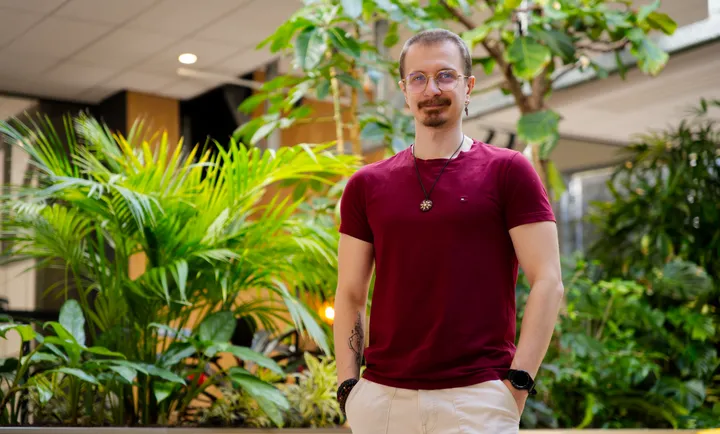
Dimitris Zafeiropoulos
Frontend Developer
29 years old - Nedapper since 2025 - Studied Information and Communication Systems Engineering - Works at MediKIT - Enjoys puzzles and problem-solving: if you break it down, you’ll find the solution - Started gaming without understanding the English language, learning to figure things out without instructions - Started gaming without understanding the English language, learning to figure things out without instructions - Believes mistakes are never just one person’s responsibility, but something you solve together - Built his own fitness app when he couldn’t find one that fit his needs.
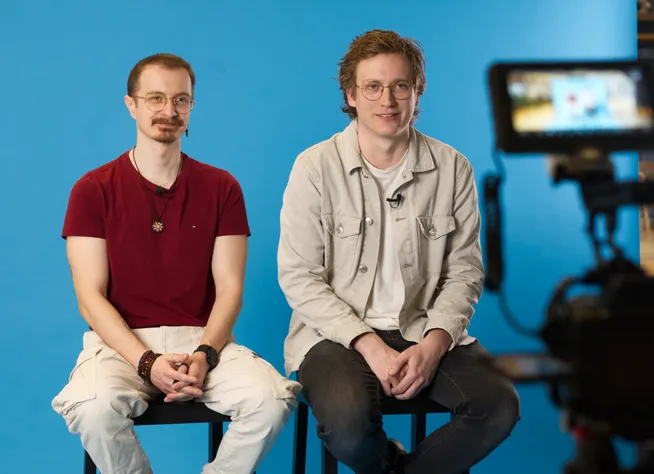
“If you don’t ask why, you miss half of the job.”
Dimitris Zafeiropoulos
Frontend Developer
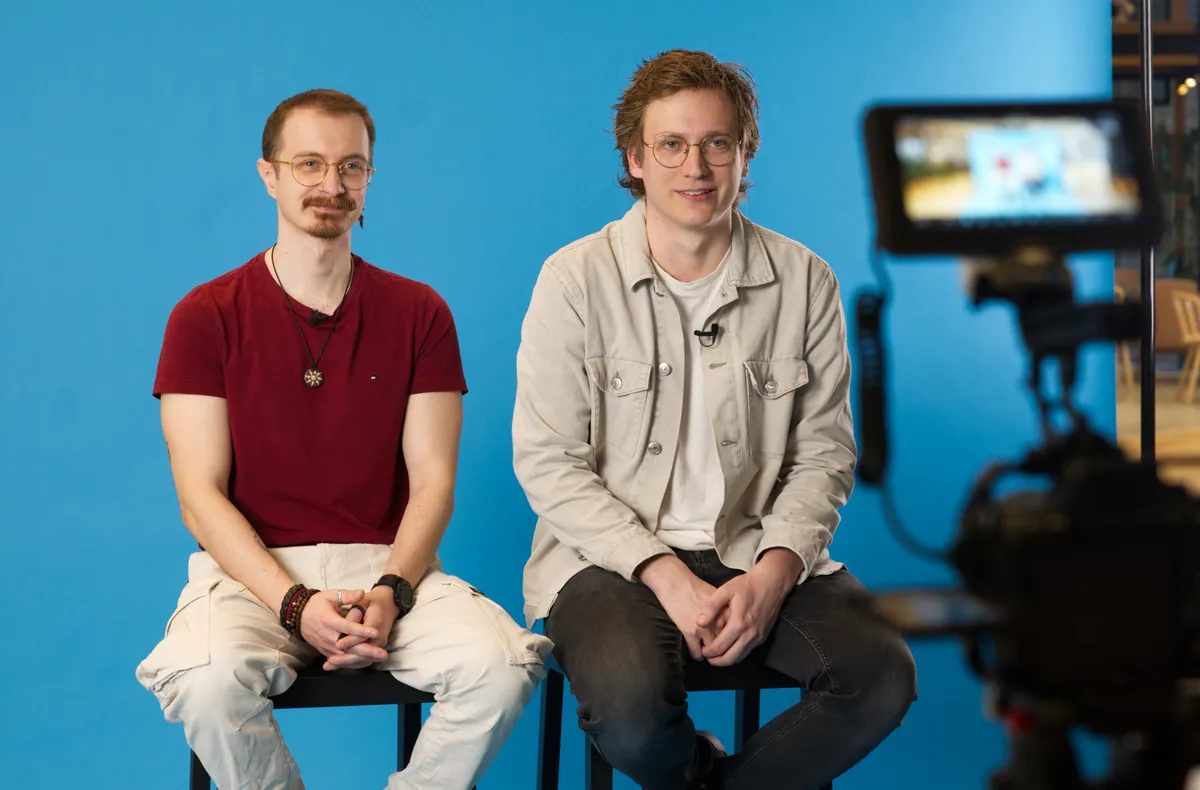
A good fit
I started at Nedap on the first of September last year, so I’m still pretty new. I moved to the Netherlands in August. I always wanted to live and work in another country. At first I was considering the UK, but because of the border situation that wasn’t an option anymore, so I thought: why not the Netherlands? I already had some friends here from school in Greece, so that made it easier. I started looking for a job through LinkedIn and found this role at Nedap.
When I looked into MediKIT, I thought: this is actually a really good fit for me. My best friend is a surgeon, and my mother is a nurse. So I’ve heard a lot about how messy systems can be in healthcare.
In Greece, everything is government-based. You can’t really change anything. So when I saw MediKIT, I could connect it to real problems I’ve heard about for years. If this ever comes to Greece, it could really make a difference.
You don’t know what you don’t know
The biggest challenge for me is not technical. It’s understanding the system. MediKIT is quite complex, and there isn’t a lot of documentation. Most knowledge is in people’s heads, so you have to ask a lot.
But that’s tricky, because how do you ask about something you don’t even know exists? For example: if nobody tells you there are earthquakes, why would you build something that can handle them? You just don’t think about it.
“You need other people to see what you don’t see.”
So what we do is work very closely together. Before starting something, I talk to people from support, UX and other developers. Everyone knows a different part of the system. Together, you get the full picture. And after building something, you go back to them again. You show what you did, and they ask questions you didn’t think of. That way, you improve it together.
Curiosity is everything
What you really need here is curiosity. You have to ask why, all the time. We had something today that “always happens”, it had basically become normal. And I asked: yes, but why does it always happen? We looked into it and fixed it.
MediKIT is not the most organized product yet. We’re moving from more of a startup phase to something more structured, and that creates a bit of chaos in between. For me, that’s actually something I like. I enjoy organizing things and improving processes.
So if you want something very structured, where everything is already figured out, this is probably not the right place. You have to like figuring things out yourself.
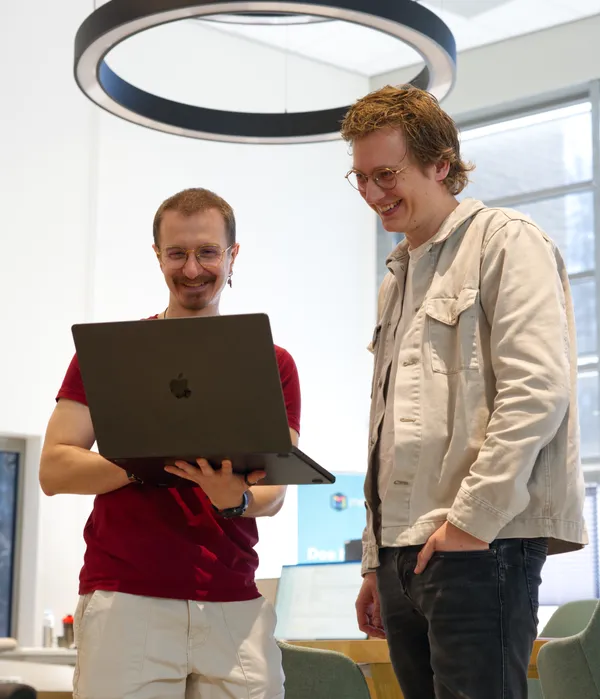
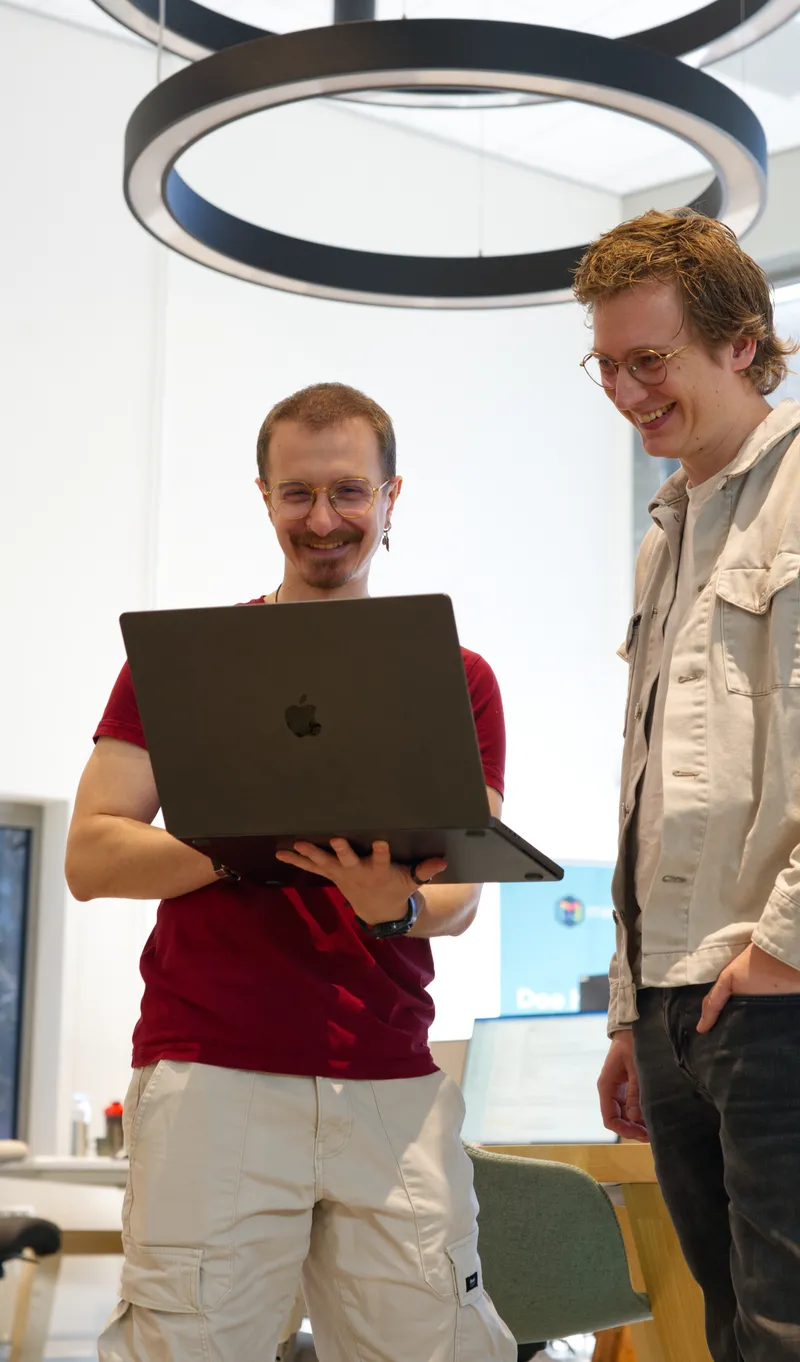
“If you just accept things as they are, you miss opportunities to improve. That’s a big part of the job.”
Switching roles
Within the team, roles are not fixed. One period you’re mainly working on new features, and another period you’re supporting the support team and picking up issues that come in. It rotates like that.
I like that way of working. When you’re helping support, you see things you wouldn’t normally notice. You see how people actually use the product, where things go wrong, and what kind of questions come up. It gives you a different view of the system. It also helps you understand the product much better.
At the same time, it can be a bit challenging, especially when you’re still new. You’re figuring things out while support is sometimes waiting for an answer. But that’s also part of it. You learn by doing, and over time you get faster and more confident.
From corporate to something completely different
Before this, I worked at Deloitte in Greece for five years. That was a very different environment. Everything was structured and formal. There was a dress code and a clear hierarchy. When I came to Nedap for the first time, I expected something similar, to be honest. But once I got inside and started talking to people, it was very different.
My colleagues really care about what they’re building. It’s not just: “I’m getting paid, so I’ll do what I’m told.” If something doesn’t feel right, you say it and you talk about it. And your opinion actually matters, even if you just started. There’s no real hierarchy. It doesn’t matter if you’re junior or senior, everyone is treated the same.
Not exactly around the corner
I live in Gouda, so working in Groenlo every day is not really an option. Most of the time I work from home or from the office in Utrecht. That works well, and it makes it possible to live a bit further away from Nedap Campus in Groenlo.
I do try to go to the office regularly to stay connected with the team. Sometimes that’s Utrecht or Nijmegen, sometimes Groenlo. Going to Groenlo takes a bit more planning because I travel by public transport. It can then take me three to four hours, depending on connections.
So usually I either go by car with colleagues, or I travel the day before and stay overnight. That’s something I can arrange through work, which makes it manageable. It’s not something I do every week, but it’s good to be there every now and then.
What excites me
What I like most about my job is that I can immediately see what I build. I work mostly on the front end, so when I change something, users see it right away. That interactive part is what makes it interesting for me.
At the same time, I see MediKIT growing. We’re improving it step by step, adding features and making it more complete. And in the end, you’re helping healthcare professionals work more efficiently, which means patients are helped faster. That’s what makes it worth for me.
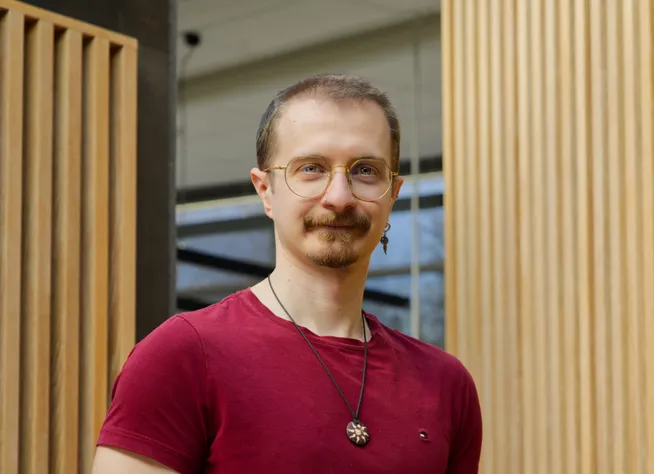
“You don’t just build something and move on, you also see what happens after.”
Dimitris Zafeiropoulos
Frontend Developer
Want to know more?
See more
Do you want to know more about our vacancies? Or read more stories of Nedappers?