Low-pressure UV advanced oxidation system
An innovative UV-C/H₂O₂ treatment system removes 86% of pharmaceutical residues from wastewater, combining high performance with low energy consumption.
Advanced Oxidation: removing pharmaceutical residues from wastewater
Pharmaceutical residues in wastewater are a growing environmental concern. Even at low concentrations, these micropollutants can negatively affect aquatic ecosystems and potentially impact public health. New European regulations are driving wastewater treatment plants to implement additional treatment steps to remove these substances. This creates a challenge for water authorities: finding technologies that combine effective micropollutant removal with low operational costs and minimal environmental impact.
Removing micropollutants without increasing energy consumption
Advanced Oxidation Processes (AOP) offer a promising solution. By combining UVC with hydrogen peroxide (H₂O₂), highly reactive hydroxyl radicals are generated. These radicals break down pharmaceutical residues and other organic micropollutants.
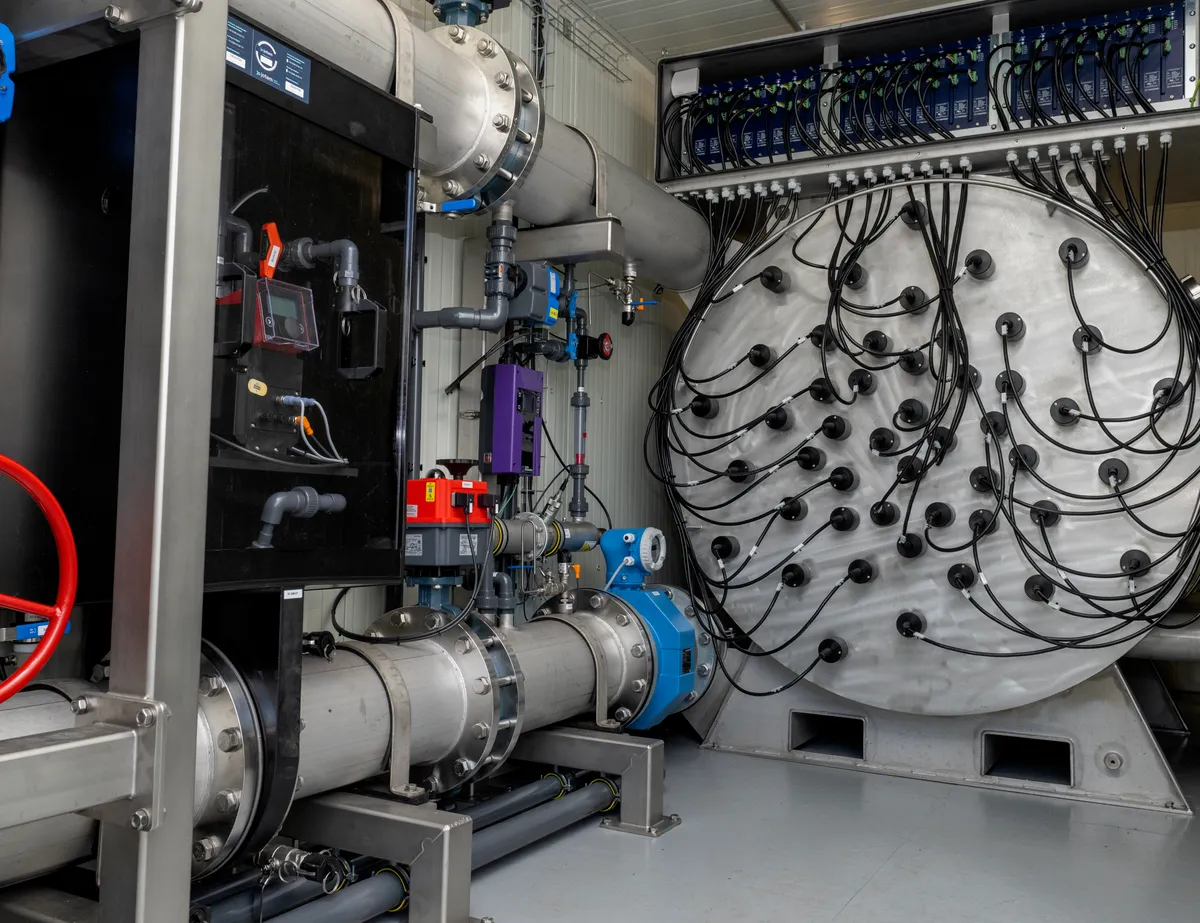
To demonstrate the potential of this technology, Van Remmen UV Technology, conducted a full-scale demonstration of its Advanox technology at the Utrecht wastewater treatment plant in the Netherlands. An Advanox Flow reactor was installed in a compact 20-foot container and connected to the existing sand filtration system, creating a fourth treatment stage.

Efficient driver technology
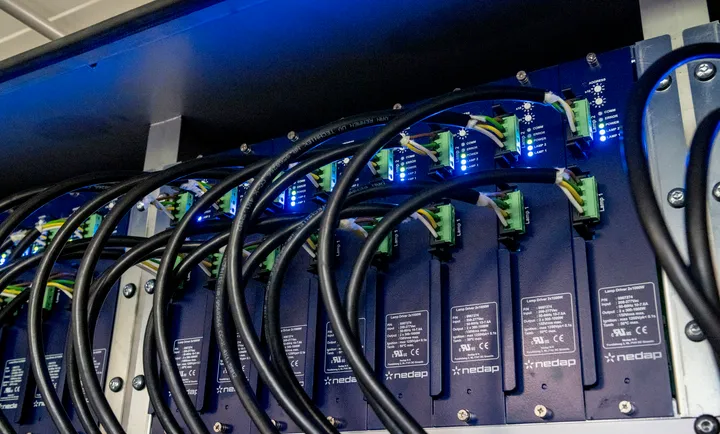
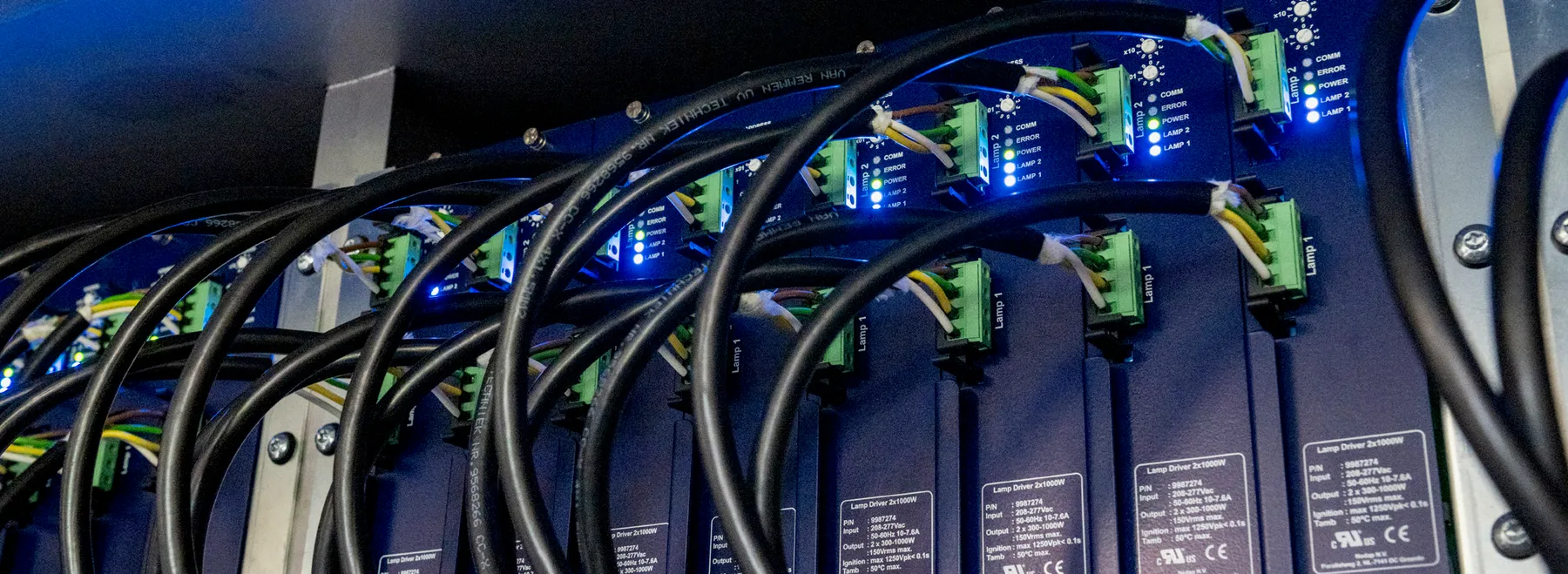
Nedap lamp drivers are designed for energy efficient and reliable operation. With an electrical efficiency of more than 95%, low Total Harmonic Distortion (THD) and a high Power Factor, they help minimize energy losses and reduce the load on the power grid.
Stepless dimming allows the UV output to be continuously adjusted to the actual treatment requirements. This reduces unnecessary energy consumption, prevents UV overdosing and helps extend lamp life. Together, these features support efficient operation of UV installations over many years.

The challenge
Energy efficiency is particularly important for UV-based Advanced Oxidation Processes. The challenge was to demonstrate that AOP technology based on low-pressure technology could deliver effective pharmaceutical residue removal at an energy consumption and cost level suitable for large-scale wastewater treatment.

The solution
Van Remmen UV Technology developed the Advanox system. The installation features 24 Nedap 2x1000W UV drivers, powering a total of 48 UV lamps. Their high electrical efficiency of the drivers helps to minimize energy losses, contributing to the overall energy performance of the UV treatment system.

The results
The demonstration showed that UV-based Advanced Oxidation can achieve high removal rates while maintaining low operational costs.
System performance
Removal efficiency
86%
Energy consumption
0.10 kWh
Treatment costs
<€0.12
A sustainable solution
Beyond its treatment performance, the demonstration highlighted the environmental advantages of low-pressure UV based AOP technology. When powered by renewable electricity, the system can achieve a low carbon footprint. Compared with activated carbon treatment, it also offers opportunities to reduce material consumption and associated environmental impact. The Utrecht demonstration confirmed that UV-based Advanced Oxidation is a viable option for large-scale pharmaceutical residue removal.