

A Wakeup Call for Finance Leaders: The Impact of Inventory Blind Spots on Retail Margins
October 2


 Tom Vieweger
Retail has become increasingly connected, but inventory visibility often remains fragmented. Products move across factories, distribution centers, stores, ecommerce channels, and consumers, while the systems tracking them rarely operate with the same level of continuity. As a result, many retailers still struggle with inventory inaccuracies, disconnected supply chains, and limited insight into where products actually are at any given moment.
RFID and digital product identification are helping retailers close that gap by creating what is often described as a digital twin: a digital representation of a physical product that exists throughout its entire lifecycle. Instead of managing inventory in batches or snapshots, retailers gain the ability to identify, track, and understand every individual item from source to consumer. This shift is changing how retailers think about visibility. It is no longer only about knowing what inventory exists, but about understanding how products move through the entire retail ecosystem.
Although we speak of digital twins for just a few years now, the concept certainly dates back to the first digital technology projects. A good example is NASA's space exploration mission of the 1960s when each voyaging spacecraft was exactly replicated in an earthbound version. Other practical examples are:
These days, product labels in the apparel, sports, and footwear industry can go beyond just sharing washing temperatures or cleaning instructions – they can be enriched with a (unique) digital identity, either via a QR code or on a chip. If products carry a unique identity, you can consider this a digital replica of a physical object. So, for example, you could simply say that the product has its own digital passport.
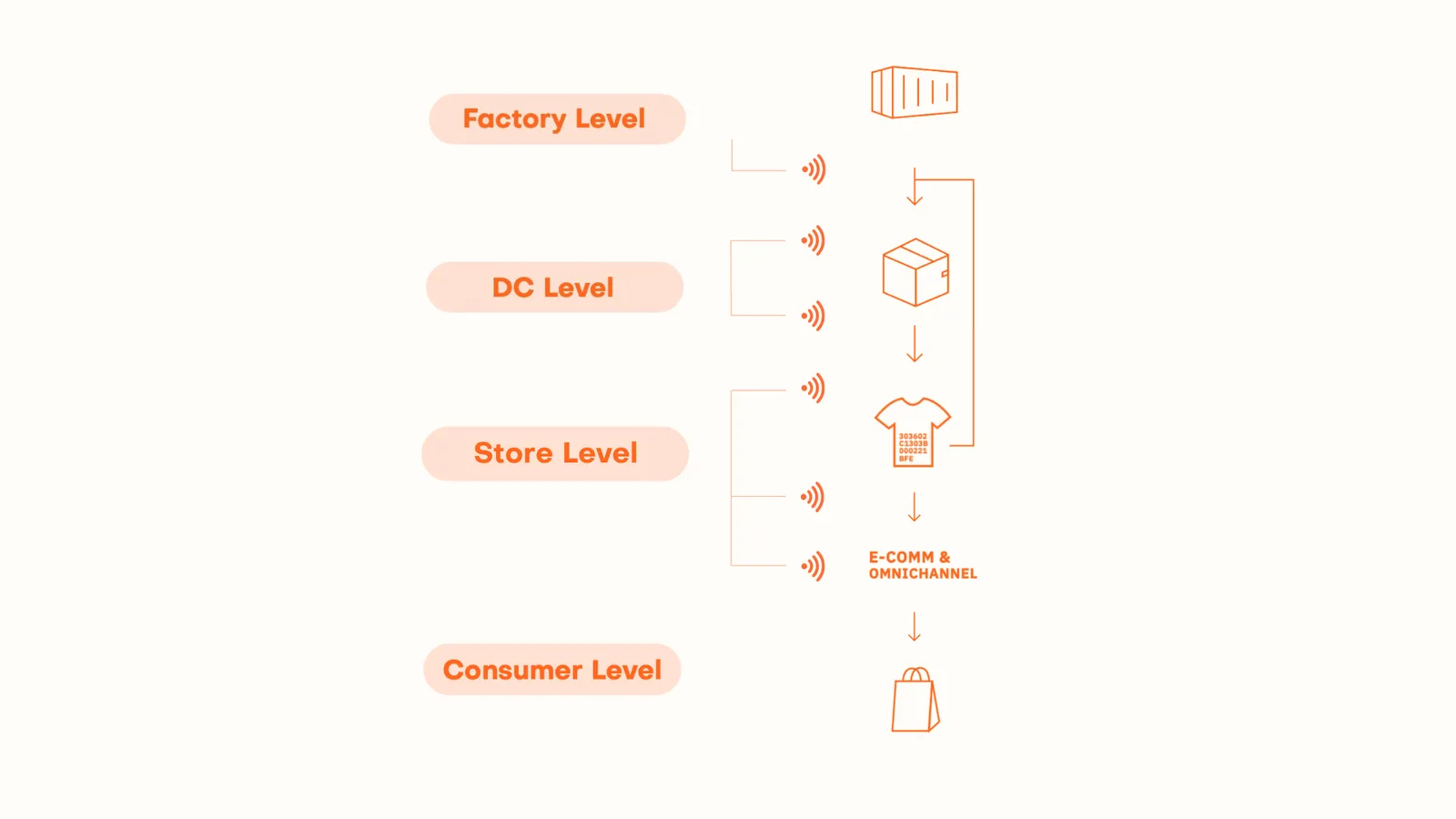
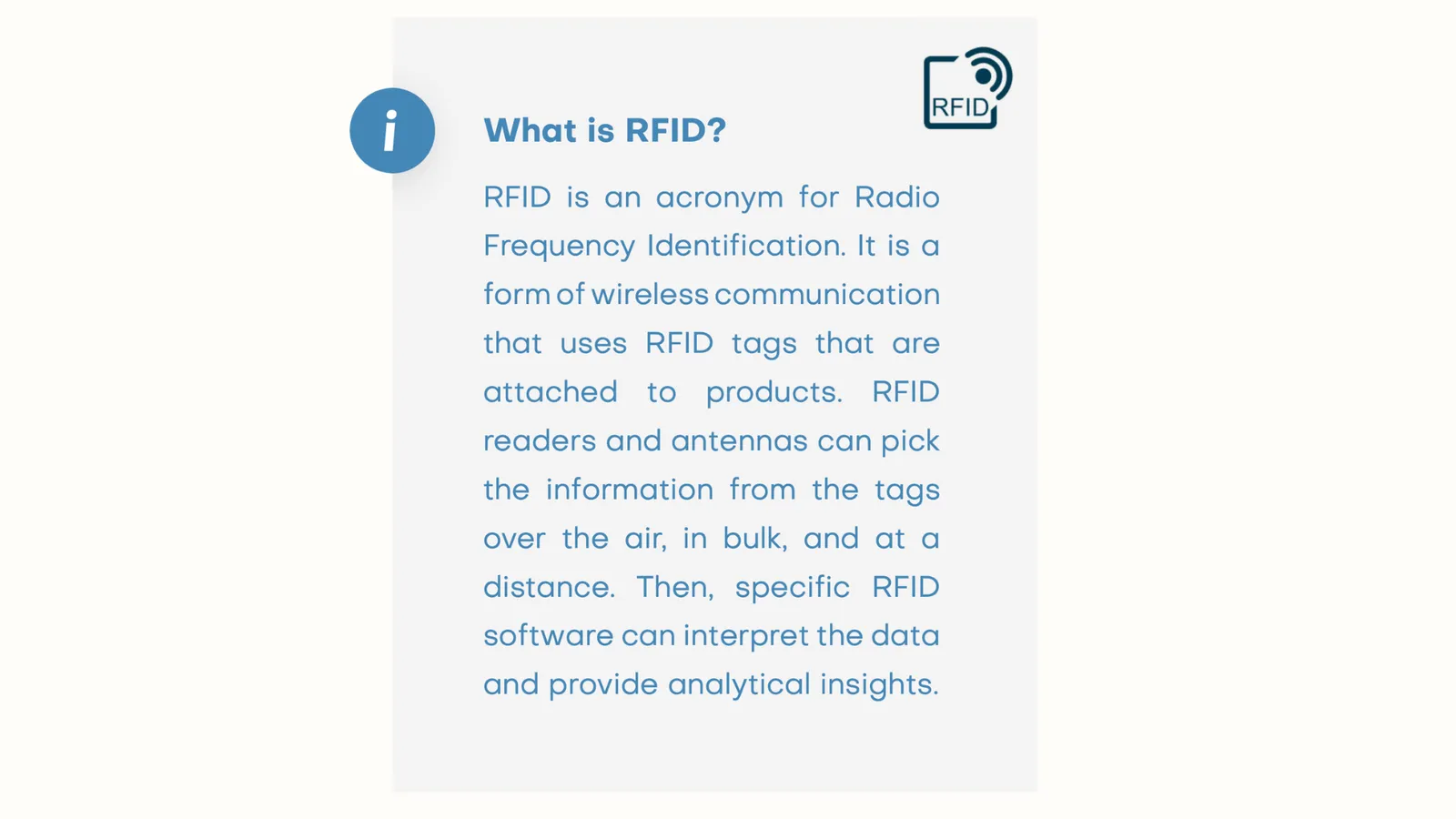
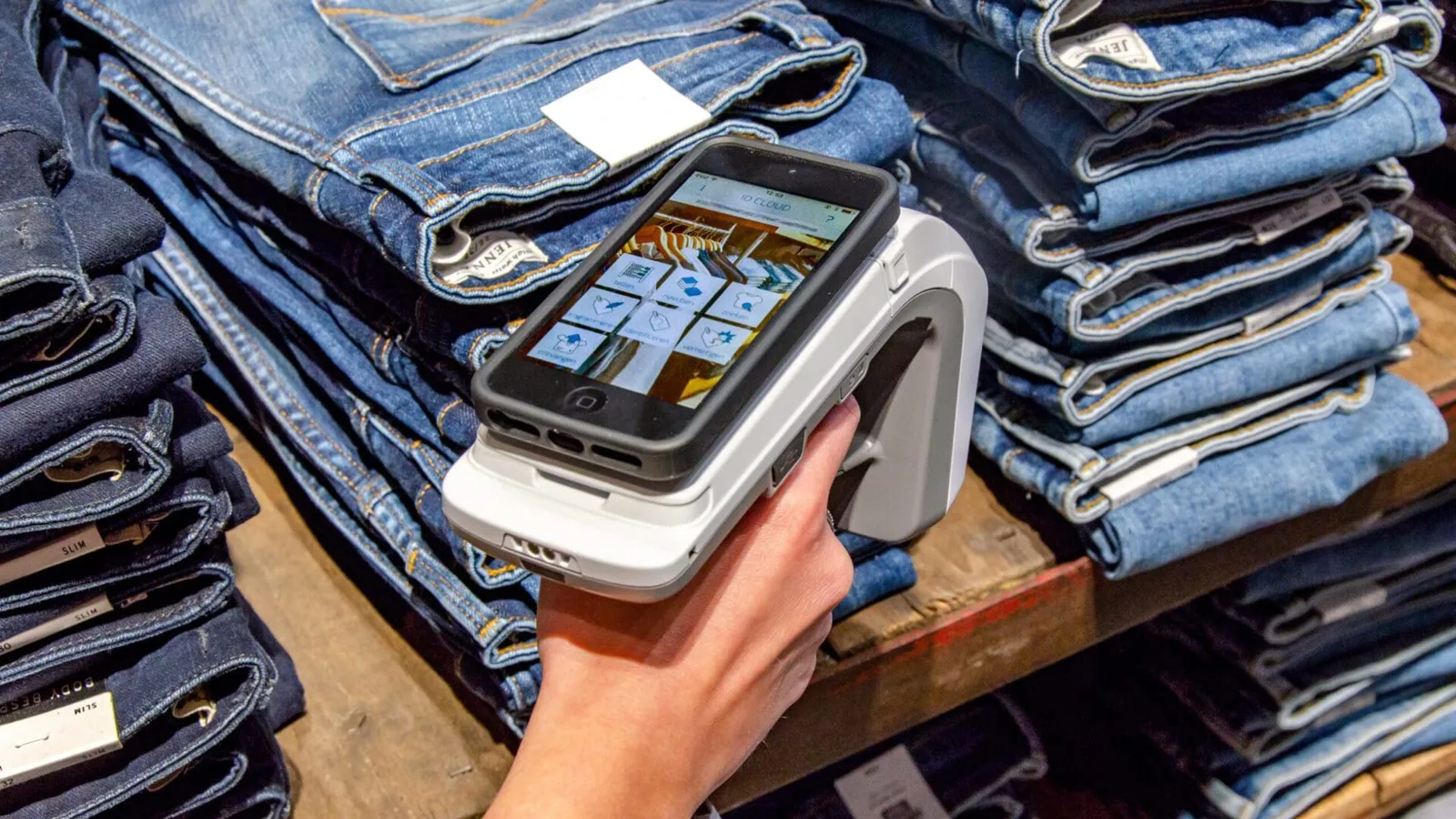
A unique digital identifier has to be attached to an individual item to connect the physical with the digital world. If the digital identity is stored in an RFID chip, it is possible to track and trace products seamlessly. If an article is equipped with an RFID tag, it's easy to register it along its way through the supply chain. RFID read-points gather data from the physical world and send it to (cloud-based) systems, where they are processed and used for additional data analysis.
From a wider perspective, physical things can be equipped with an additional sensor that generates even more data. These sensors can produce data, e.g., about temperature, humidity, or pressure. So anyone looking at the digital twin can now see crucial information about how the physical thing is doing out there in the real world. This data can then be relayed to a processing system and applied to the digital copy.
Consumers are becoming more conscious of the impact of the products they buy and the brands they support. Sustainability, ethical sourcing, and social responsibility remain important considerations, particularly among younger generations. At the same time, purchasing decisions are becoming increasingly pragmatic. While brand purpose still influences emotional connection, consumers are placing greater emphasis on quality, durability, availability, and fair pricing¹.
“While brand purpose still influences emotional connection, consumers are placing greater emphasis on quality, durability, availability, and fair pricing.”
State of the Consumer 2024
McKinsey, 2024
Trust through consistency
Purpose continues to shape how consumers perceive brands, but long-term loyalty is increasingly built through consistent delivery. Recent research shows that shoppers reward brands that combine transparency and responsible business practices with reliable quality, strong value, and seamless customer experiences². This shift is also changing consumption patterns. Instead of prioritizing fast or trend-driven purchases, many consumers are becoming more intentional in their buying behavior, with growing interest in resale, repair, and higher-quality products that last longer.³
Sustainability as part of the value proposition
Sustainability remains an important factor in brand choice, but consumers increasingly expect measurable action rather than high-level messaging alone. Transparency, traceability, and authenticity are becoming essential to brand credibility.⁴ For brands and retailers, this means sustainability can no longer stand apart from operational performance. Product availability, supply chain visibility, accurate information, and consistent experiences all contribute to how consumers define value today.
Brands are strongly pushing their direct-to-consumer (D2C) business through both online shops and new physical stores. Brands with a strong D2C business gain real-time insights into what customers want and quickly respond to the actual demand. In this context, own stores are becoming a platform that connects the community with the brand. Ultimately, stores are points of contact, where shopping experiences come to life. Unsurprisingly, one of the most important reasons consumers switch brands is that the desired product is unavailable.
One of the most fundamental changes resulting from the COVID-19 crisis is where and how consumers are shopping. For the last few years, there has been an ongoing adoption of omnichannel concepts – or: “everywhere commerce”. Especially in times of lockdowns and social distancing, shopper behavior has massively shifted to buying online and we can expect that this is here to stay. Consequently, an increasing number of digital touchpoints are becoming the first point of contact for consumers with their favorite brands and shopping destinations. At the same time, brands are complementing their physical stores and digital offerings to get to a “phygital” model, with innovative applications to mount a truly omnichannel experience.
To address these trends, data-driven brands need actionable insights. The overall goal is to ensure products are always available to shoppers. Tracking stock movements and status changes in real time is especially important within complex supply chain structures, where products are regularly shipped and transferred between partners, warehouses, distribution centers, and stores.
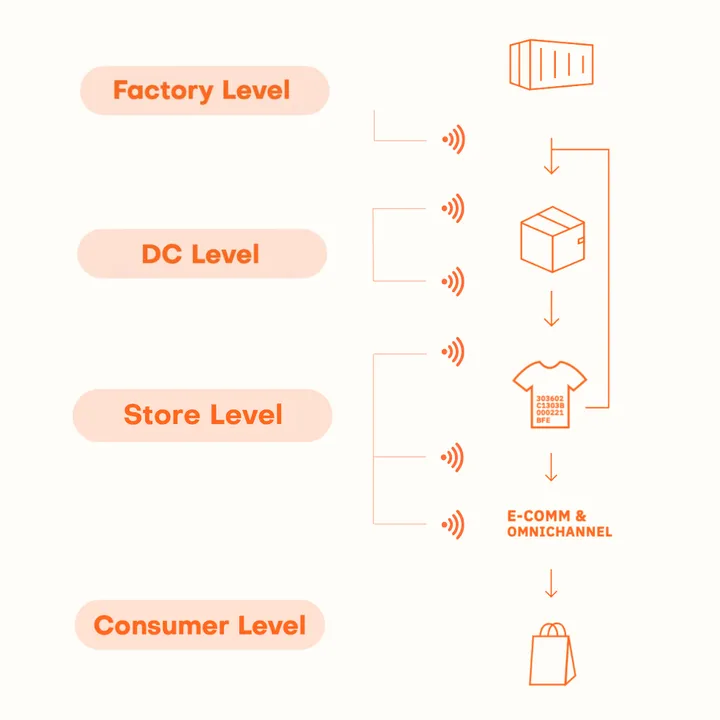
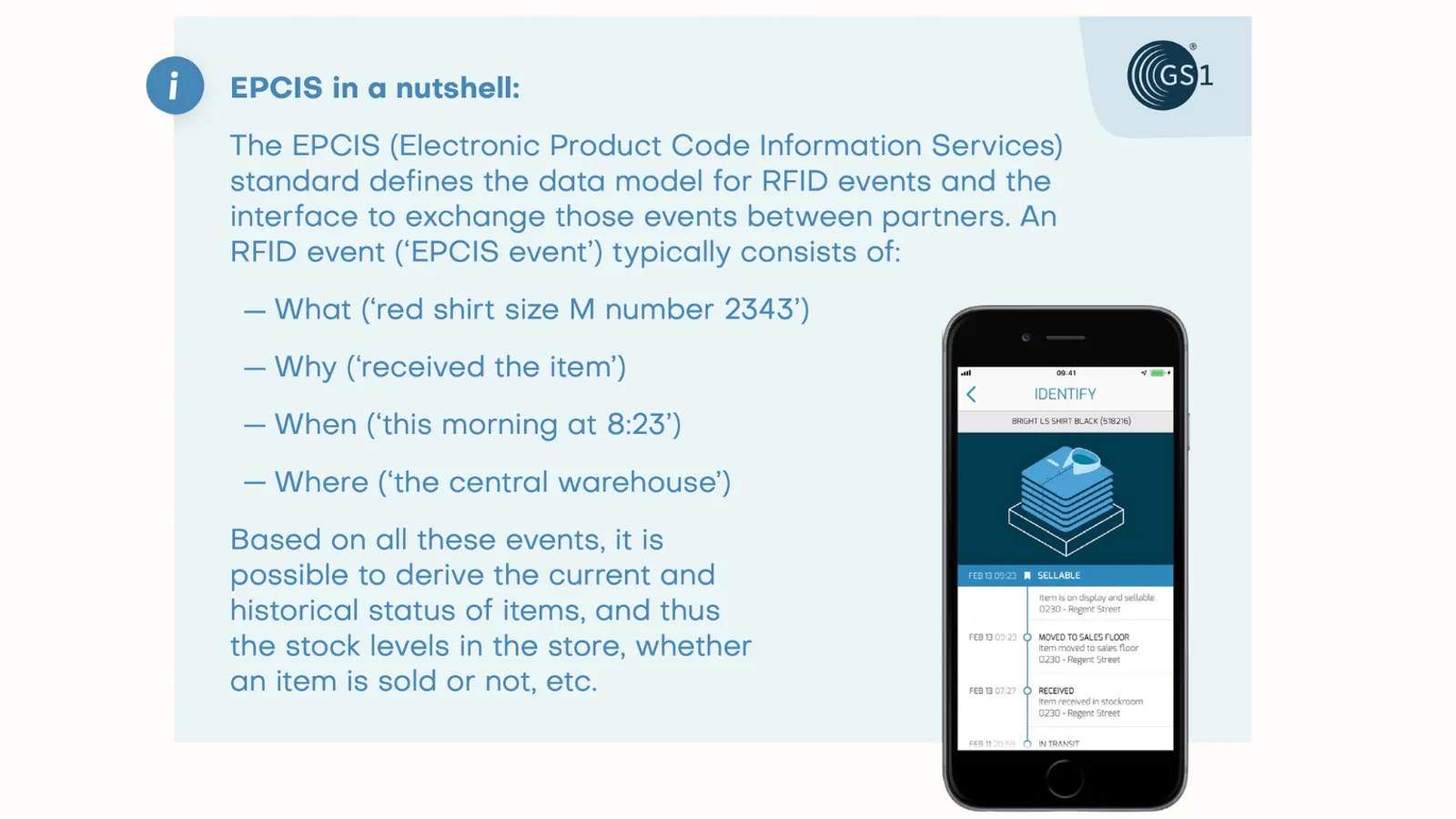
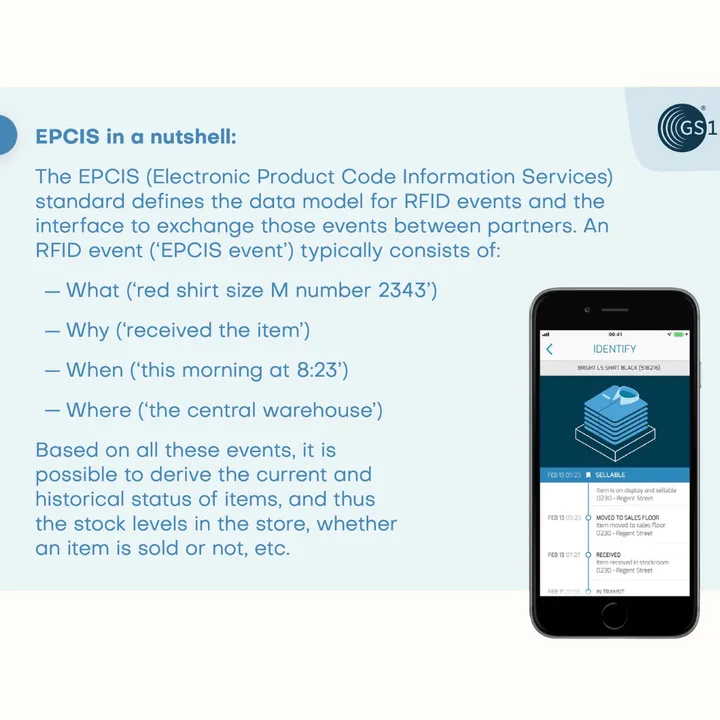
With RFID in place, brands can seamlessly collect data from various read points wherever a product’s location or status changes. An EPCIS repository acts as the central platform that adds detailed information about the actual stock situation across the entire supply chain. Together, RFID and EPCIS create comprehensive inventory visibility, enabling demand-driven allocation, provenance insights, predictive replenishment, and stock transfers to the locations where products are truly needed.
There will be growing expectations for brands to make shopping faster, easier, and more transparent in the coming years. Consumers increasingly expect accurate product availability, seamless experiences across channels, and real-time insight into where products are, how quickly they can be delivered, and whether they are actually in stock. Besides that, shoppers still expect strong product quality, ethical sourcing and fair pricing, making operational reliability more important than ever. To meet these expectations, brands need greater visibility across their supply chains and inventory flows. Below are several ways RFID solutions help address these challenges:
Origin information
Brands and their customers, as well as partners and even legal authorities, need to know if products are genuine and where they originate from. Digitizing products and tracking them along the supply chain can generate unmatched insights. In this context, RFID provides a secure, unique product identification and tracking data in the EPCIS repository, delivering insights into their actual provenance. At the same time, all over the world, there are legislative initiatives that even make certain supply chain tracking, on an item-level, mandatory. The intention is to support social responsibility, sustainability, and a circular economy by bringing transparency into the global value chains.
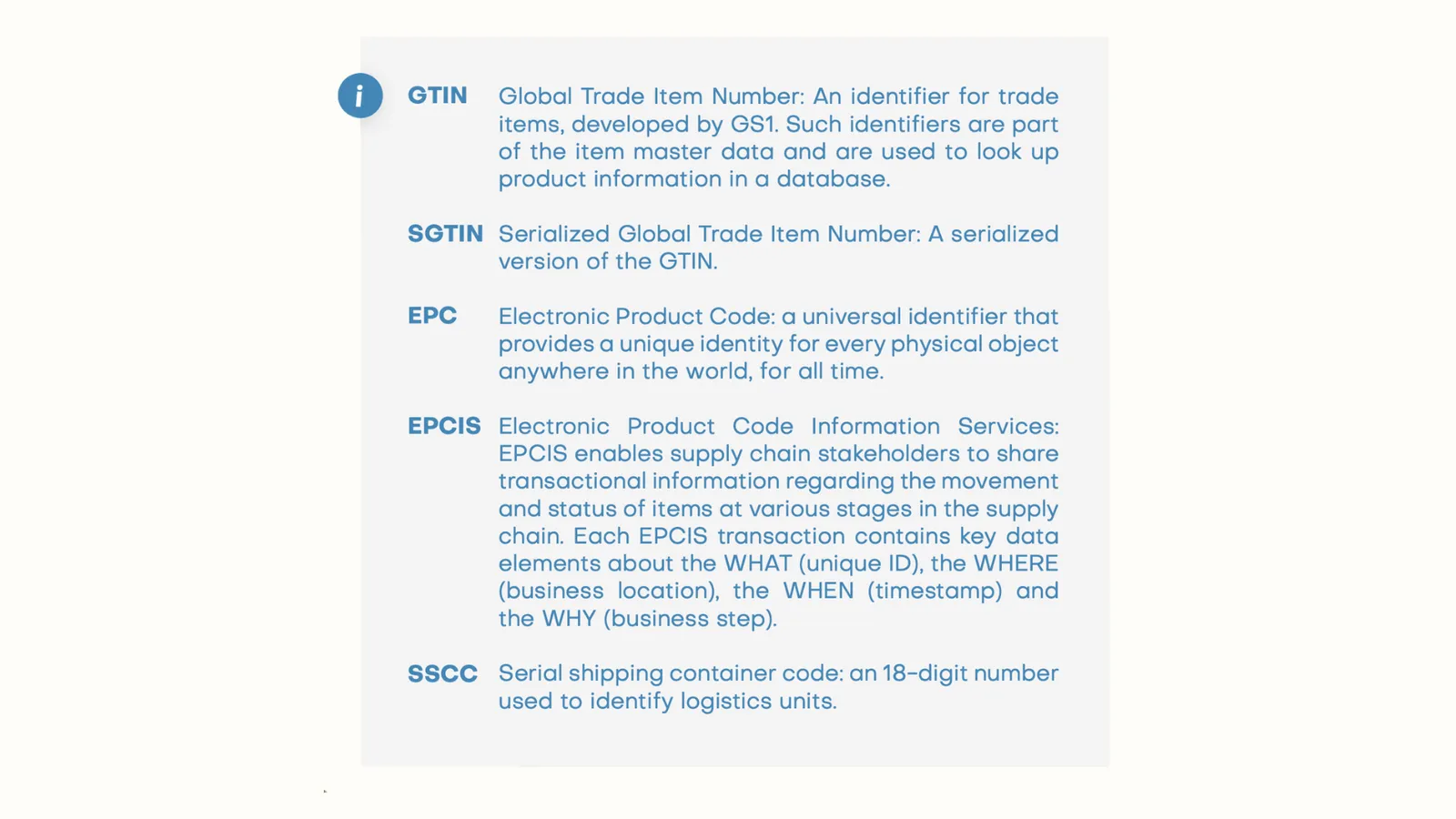
With RFID and an EPCIS platform, brands can uniquely associate tags to products with serial numbers (SGTIN), which act as a “digital product identity.” As an additional security measure, all information can be encrypted on the RFID chip. Allocating and managing the digital identities and tracking all product events along the distribution network in a platform enables brands to prevent counterfeits and illegal sales.
Product authenticity
Counterfeit products are a growing problem for brand manufacturers, causing a tremendous loss of reputation, trust, and money⁵. Consumers expect brands to be transparent about production conditions, raw materials and environmental impact. Finally, they need to trust the origin. Many imitations are so good that even experts find it difficult to distinguish between original and imitation. Customers are barely able to recognize counterfeits and want to know if a product is genuine and authentic.
Sustainability
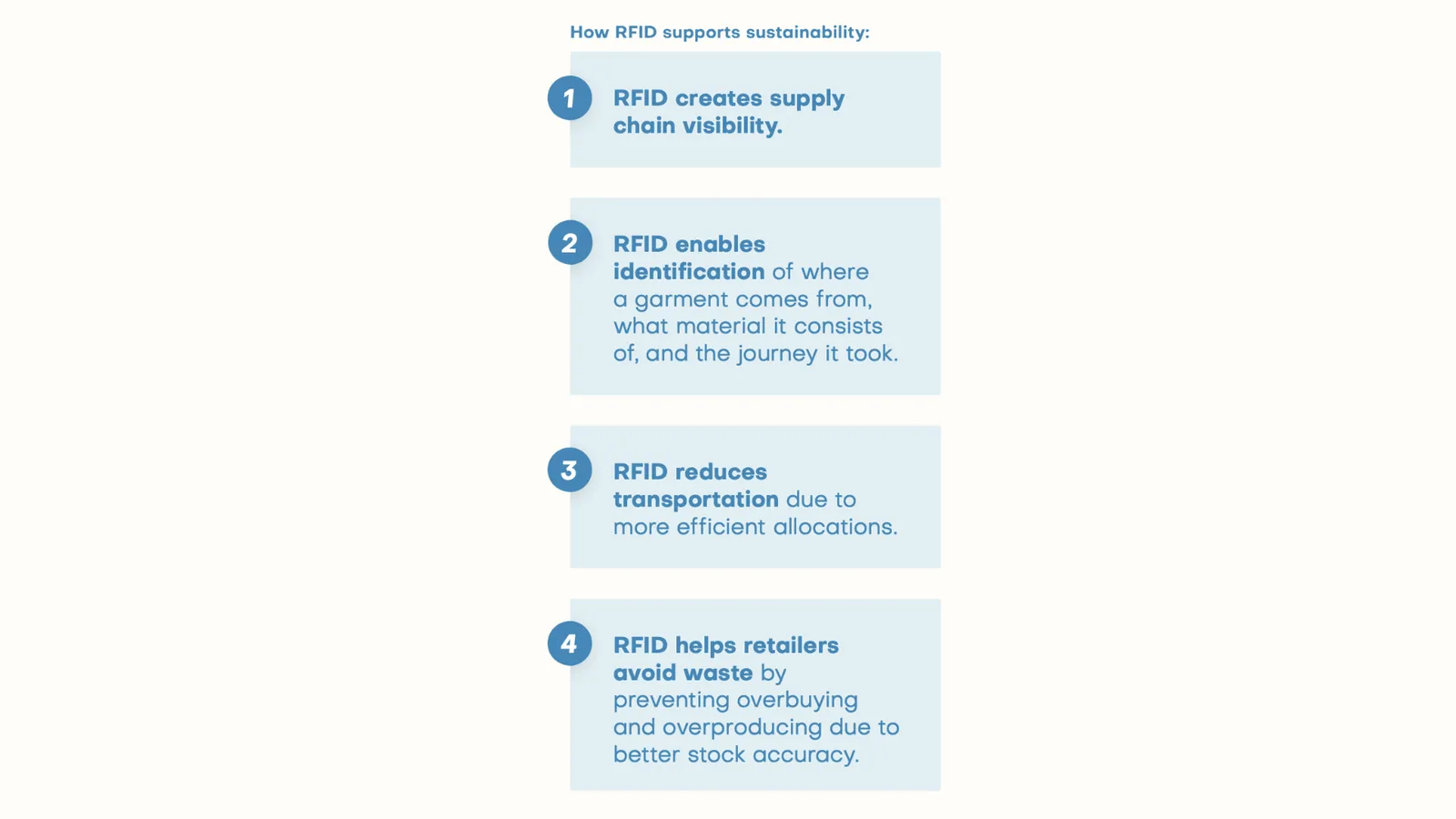
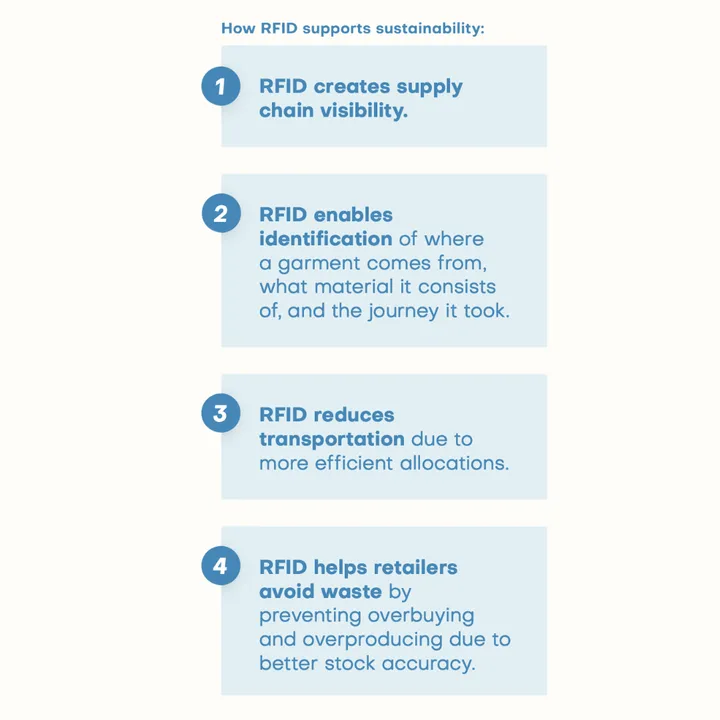
Being able to leverage technology and data is crucial to accelerating the transformation towards a circular economy. If an RFID tag is applied to a product, it is the foundation for transparency and traceability within the entire supply chain. This makes it possible to precisely identify the material composition, value and quality of each product. Additionally, a central data platform, the EPCIS repository, contains the story of a product, along with its essential provenance data. This is the basis to provide information about a product’s origin and can be used to provide a “sustainability pedigree.”
There is no doubt that omnichannel is here to stay. The number of delivery and pick-up services that are offered to customers is ever-growing. At the same time, the expectations of shoppers are steadily growing. Shoppers expect their desired items to be ubiquitously available, whether they browse in a bricks-and-mortar store or online. With these expectations in mind, brands are extending their service options, such as ship-to-home, ship-to-store, ship-from-store, buy-online-pick-up-in-store (BOPIS / Click & Collect), and a range of return choices. In this context, stock visibility is a key enabler for keeping the ‘availability promise’ and making customers happy!
Full stock visibility
While the lines between stores, e-commerce, and warehouses are blurring, the complexity in the supply chain is growing massively. This is why product visibility and inventory accuracy have become the foundation for efficient omnichannel operations. Only when it is clear where products are, brands and retailers can successfully fulfill their omnichannel promises. Since RFID can automate inventory management, brands can leverage the technology to achieve real-time data insights and ensure high product availability.
Connecting the silos
An EPCIS repository connects the various silos of stock-keeping systems along the supply chain, such as WMS, SCM, ERP, or POS. It is the umbrella above all those isolated data silos and, consequently, holds the entire history of each product’s movements from end to end.

Unique item-level
RFID-based item-level status management provides exact information about the sellable stock, even among various sub-locations.

Real-time
RFID provides a true real-time perspective on the actual stock situation by covering all product movements and status changes via dedicated read-events in a central inventory pool.

Interoperability
Suppose a brand manages its stocks on multiple channels. In that case, it is possible to exchange data from its own EPCIS pool with third-party systems – having the EPC as the unique access key to the data.
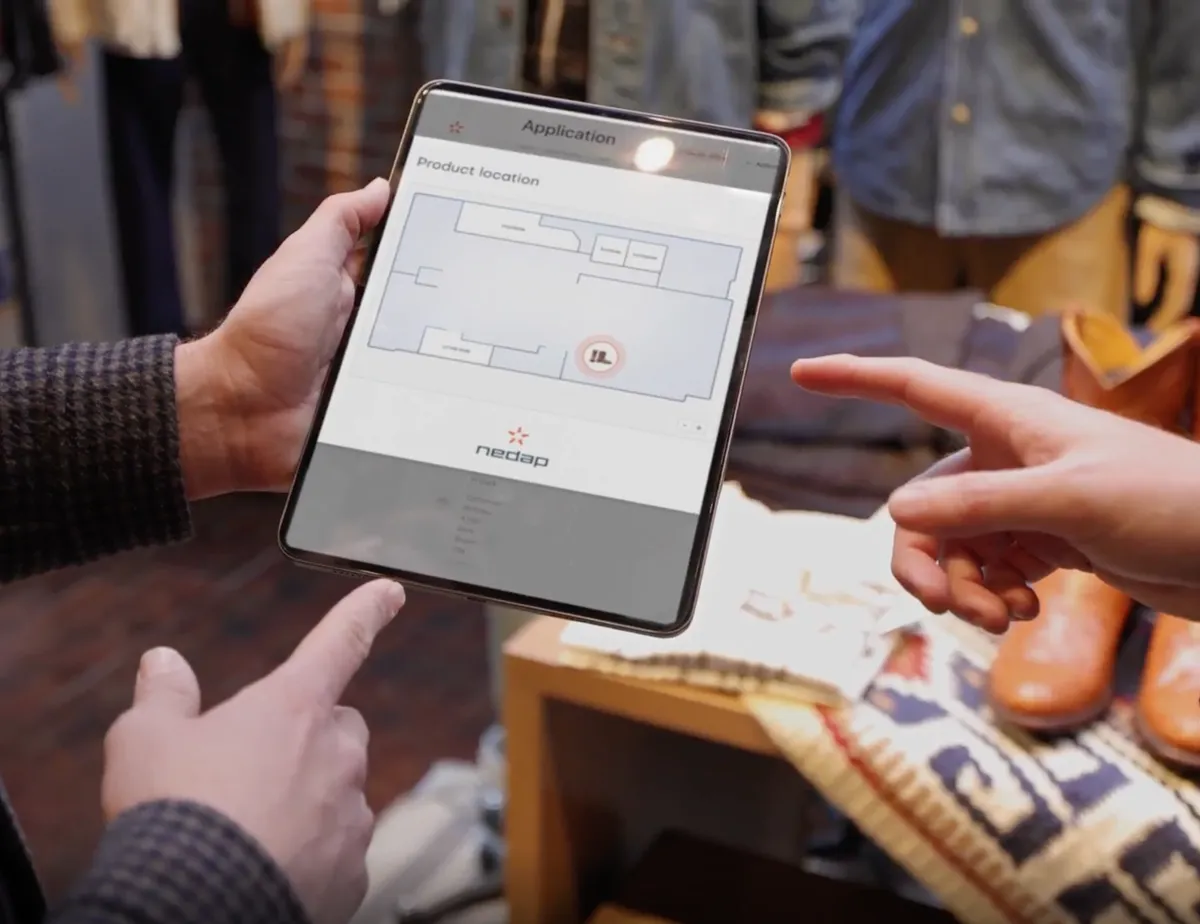
While brands take more control of their sales channels and continue to increase their direct-to-consumer activities, a significant proportion of most brands’ revenue still comes via retail partners. To be successful together, they are more and more moving towards a “win-win situation” by sharing stock information and collaboratively managing inventory. Ultimately, brands and retailers share responsibility for an excellent customer experience.
The concept is not new: for the last 15 years, brands and retailers were already working on collaborative planning, forecasting, and replenishment (CPFR) initiatives. They are sharing sales and inventory data over so-called electronic data interchange (EDI) processes. However, this “one-to-one” communication is slow, error-prone, and requires a lot of manual data clearing. Furthermore, it does not provide insights into sublocation-level or unique item-level data. This is where a stock visibility platform, such as EPCIS enhances the concept of vendor-managed inventory to the next level.
Shoppers who want to buy products from desired brands do not care if they come from an owned-and-operated store, a franchise store, a department store, or a retail chain. They just want to know where they can get the product from. Shared inventory information enables the partners to offer products already close to the consumer rather than putting additional inventory into the market. With “Unified Stock,” brands and retailers can give each other access to their eCommerce and order management systems. The ultimate goal is to provide (real-time) data about available products to customers via online channels, apps, etc. If the brand’s web shop is connected with the stock of the retailer’s store, the digitally available product range is extended.
“One of Scotch & Soda’s long-term goals is to maximize customer loyalty. We have been looking into RFID for quite some time already. Now is the time for us to step in, as product availability has become vital to fulfill the increasing demand of today’s consumers.”
Rik Kok
Chief Operating Officer
Boosting brand loyalty starts with adequate fulfillment and return strategies. Customers do not only expect to view in-store inventory online; they also want to order, reserve, and even return their products immediately. At the same time, rising customer expectations for fast delivery have triggered the development of innovative fulfillment options, taking advantage of existing infrastructure, such as the existing store network – whether owned and operated or partner stores, franchise stores, or wholesalers. There are clear benefits to fulfill orders from stores, for example, enabling greater overall inventory productivity, quickening speed to customers, and avoiding markdowns.
Additionally, just as shoppers now expect flexible fulfilment options, they also demand the same experience and options when returning a product. Shoppers consider easy returns as an inevitable service. An EPCIS allows retailers to accept returns at any location, offer partial or full returns, and get the item back into inventory as soon as possible.
“We want our customers to be able to shop everywhere and return any-where, whether an item is purchased in Copenhagen or in London”
Tommy Nimand
Chief Financial Officer
Micro fulfillment center
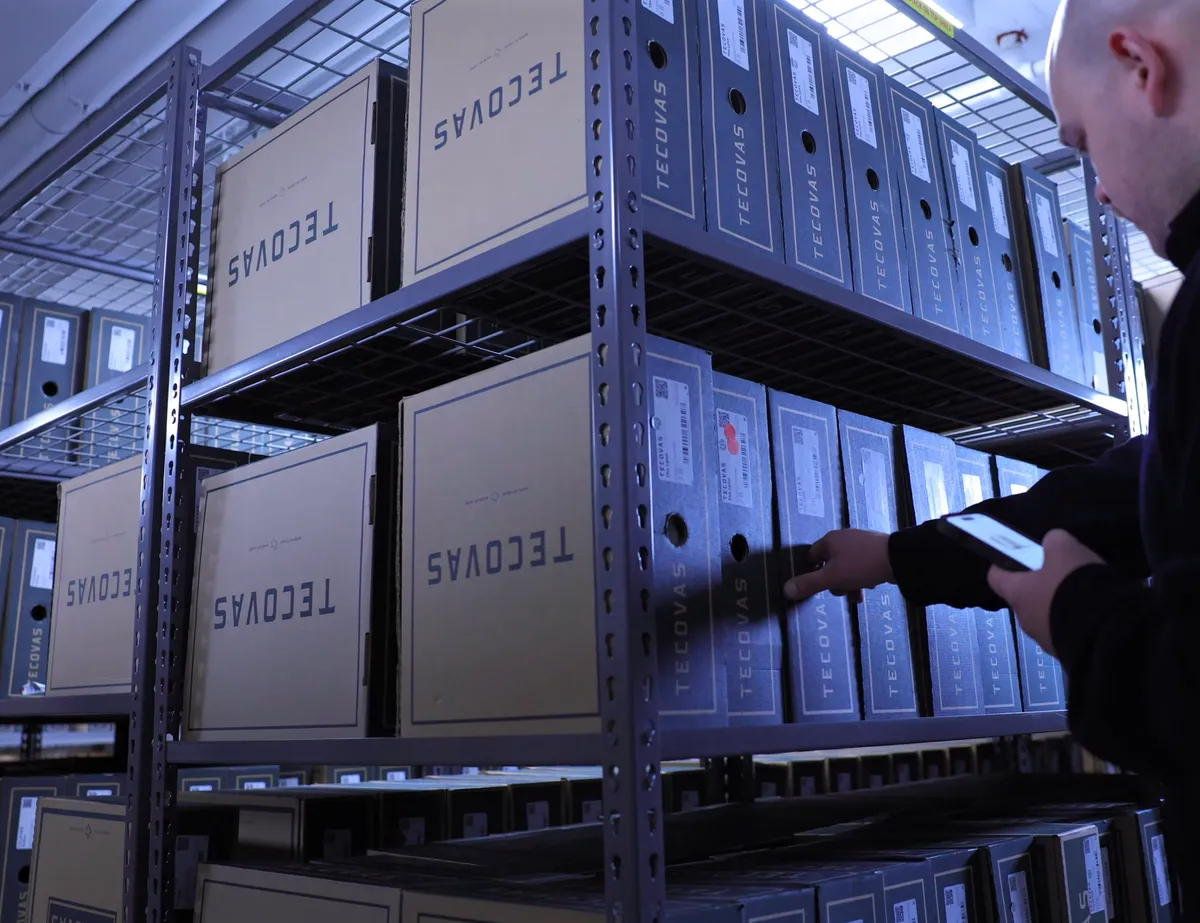
With fewer people visiting physical stores and the ever-growing number of online orders, stores can be augmented to ‘micro fulfillment centers’ or so-called ‘mini DCs.’ In this concept, the stock of existing stores is utilized to fulfill orders from other channels, such as e-commerce. Moreover, since the store stock is closer to the consumer, orders can be fulfilled faster and in a more eco-friendly manner.
Dark store
A “dark store” (sometimes also referred to as “black store”) is a non-customer-facing mini-warehouse that usually is located within a city center. Often these locations have been normal stores in the past but were shut down. Now, they hold products, which are picked, and shipped directly to nearby consumers.
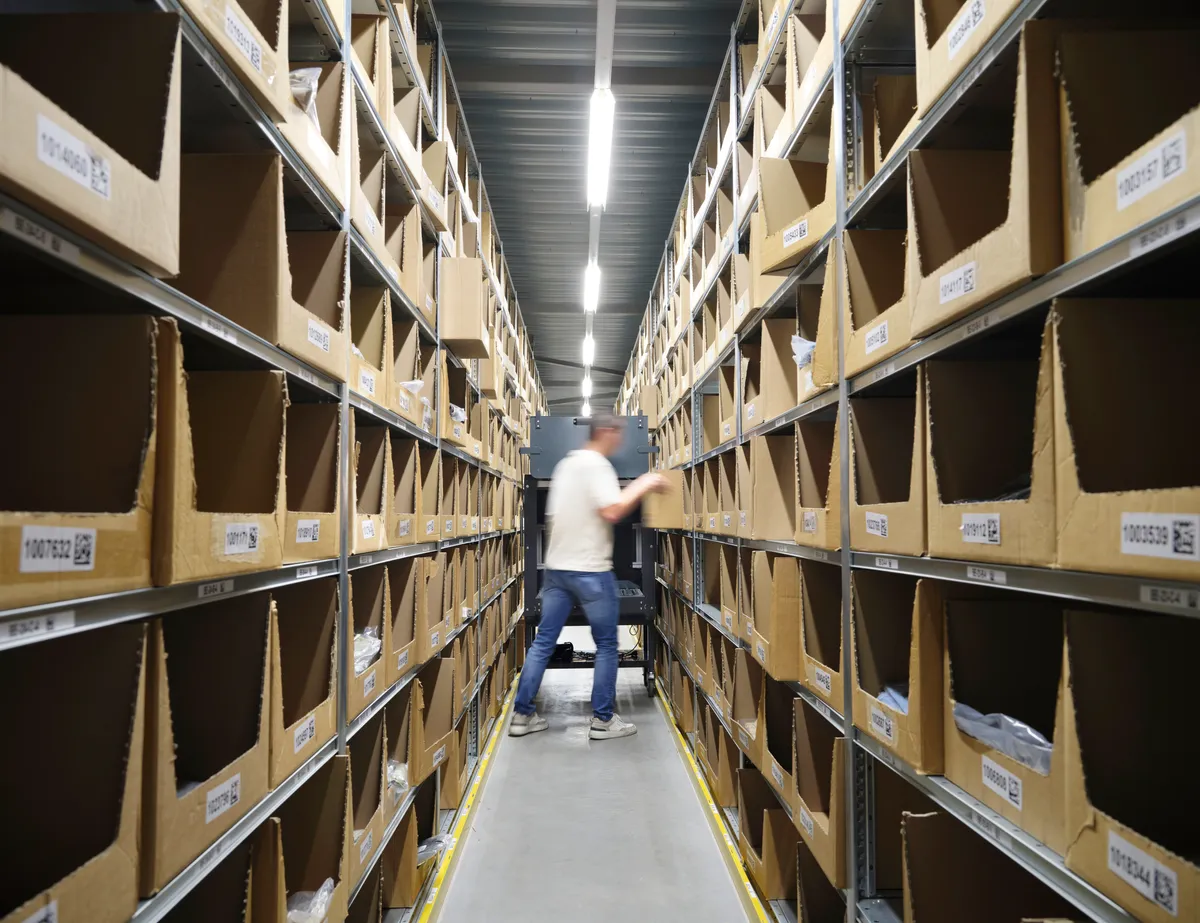
For brands and their direct-to-consumer sales channel, all aspects that impact the shopping experience are vital. Besides the omnichannel paradigm, they also require detailed insights into their supply chains in order to optimally execute their distribution strategy. This includes tackling the growing challenges of counterfeiting, grey markets, and overdistribution.
Brand owners need to know where their merchandise is. Not having full control of distribution can result in lower full price sales of authorized products, inability to control quality, dilution of IP rights, and customer confusion. Thus, tracking and tracing the products with digital identities, in real-time, can help retailers stay ahead of the product’s flow and guarantee that products are authentic and originating from genuine sources. In addition, when products carry a unique digital identity and are tracked from the very beginning, customers can trace them back to their origin to see if they are authentic. This combats counterfeits and increases the trust in the brand’s value.

In a world of online marketplaces and connected supply chains, brands struggle to ensure that their products are only being sold in authorized channels. By using RFID, brands can easily keep track of which retailer gets which product to keep tighter control over potentially (re-)selling to unauthorized resellers. For example, suppose all outgoing products are registered on a unique item level and at each unit’s destination. In that case, brands can later find out if their products have been distributed into the right, valid, channel or if they have been resold to any grey market.
As outlined in the previous chapters, RFID on the item-level in combination with an EPCIS repository will add another level of information about the actual stock situation along the entire supply chain for data-driven brands and retailers. Creating true and comprehensive stock visibility enables demand-driven allocation, predictive replenishment, and stock transfers to the location where products are really needed. And finally, this will enable brands and retailers to make their customers happy. But the question is where and how to start this journey. This chapter provides actionable insights.
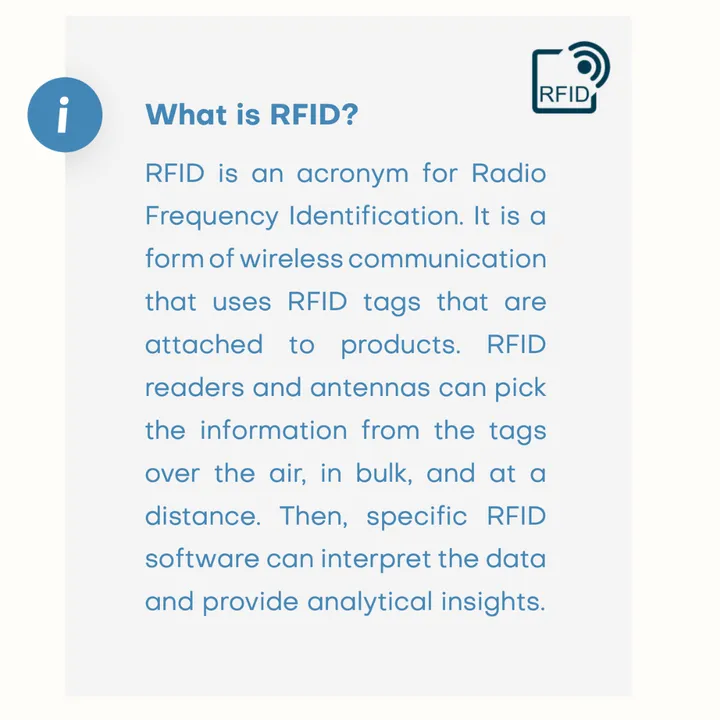
A so-called digital identity is turning each product into a data-generating asset. The prerequisite is that a serial number makes each product unique. In this context, “serialized data” can be carried on RFID tags or as a visual representation, such as Datamatrix, QR Code, or GS1 Digital link. If an RFID tag is the data carrier, the digital identity is also often referred to as “EPC” – the Electronic Product Code – syntax for unique identifiers assigned to physical objects. Since there is no one-size-fits-all solution, we believe that the future of digital product identities is hybrid - with a combination of different carriers, such as RFID, NFC, paper labels with QR codes, watermarks, or even embedded options.
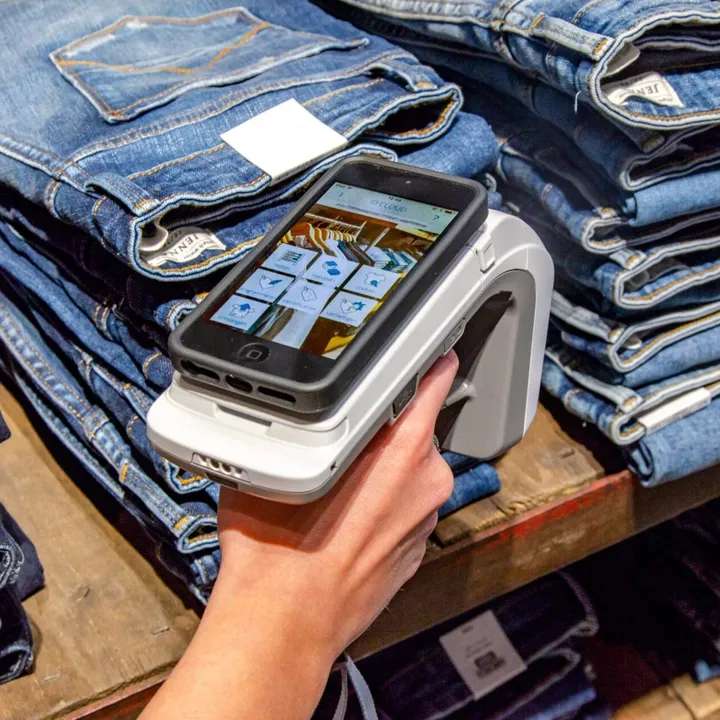
Break down inventory silos by creating a single view of stock across your entire supply chain. Once products are equipped with RFID labels - ideally at the source - it is possible to seamlessly track and trace all movements along the entire supply network. Using RFID technology in the supply chain enables error-free, real-time efficiency and visibility throughout operations. RFID read-events are then synchronized with an EPCIS repository, which – as a consequence – acts as a real-time stock visibility platform. Such a platform provides a standardized single point of integration to business and consumer applications for complete supply chain and inventory visibility in real-time. It monitors inventory transactions and movements from all related sources in real-time and can provide accurate stock information to relevant back-end systems, such as order management.
In many organizations, stock information is often kept in different silos such as ERP, POS, WMS, et cetera. Another problem is that stock information is often inaccurate, especially when it comes from the stores based on existing error-prone manual processes. Often, stock information is “outdated.” For example, suppose a retailer is just collecting overnight stock positions from various systems. In that case, the result of this calculation from last night will not represent the actual stock situation when a customer wants to buy. And finally, not having accurate insights into stocks has negative consequences: too much inventory sucks up the cash flow in carrying costs, while too little leads to stock-outs and lost sales. And as retailers develop more and more channels to increase revenue and brand awareness without real-time stock visibility to manage the whole thing, mismanagement costs keep rising.
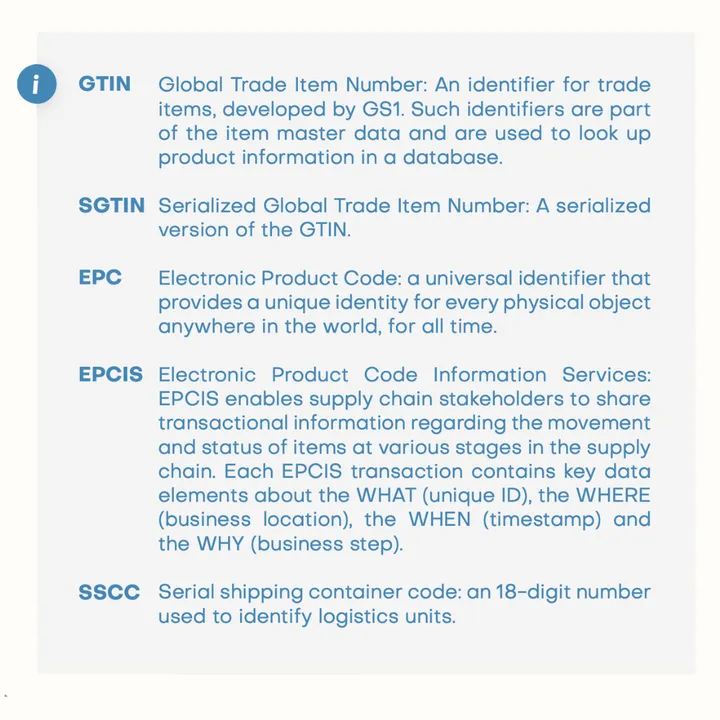
Exchanging stock-relevant business data amongst brands, retailers, and other partners can easily and trustfully provide deep insights into the provenance, the location, and the status of products. The use of standards for identification (GTIN/SGTIN) and communication (EPCIS) is essential for successful collaboration. These standards guarantee efficient, cross-company communication and enable them to integrate their data with speed and ease. By exchanging information from the brand’s EPCIS with the retailer’s EPCIS, relevant stock data along the supply chain can be digitally exchanged and ensure more transparency and trust in cooperation. The presence of serialized data in the supply chain is steadily growing as more brands adopt source tagging. Therefore, GS1 standards guarantee efficient, cross-company communication and enable companies to integrate their data with speed and ease.
The foremost reason brands implement RFID is to be able to maximize the customer experience by having full stock visibility. Successful RFID projects have one thing in common: the solution is embraced by the users.
At Nedap, we help global retailers successfully adopt and scale RFID by enabling real-time stock accuracy, improving product availability across channels, and supporting smarter operations — empowering brands to enhance their processes, wherever they are in their journey.

State of Consumer 2024: What’s now and what’s next, 2024.
The Value-Seeking Consumer, 2025.
2024 Voice of the Consumer Survey, 2024.
Consumers care about sustainability - and back it up with their wallets, 2023.
The Economic Impacts of Counterfeiting and Piracy – Report prepared for BASCAP and INTA, 3 February 2017
October 2
September 30