


A Wakeup Call for Finance Leaders: The Impact of Inventory Blind Spots on Retail Margins
New data from senior finance decision-makers at top retailers shows how brands are closing visibility gaps and the benefits they’re seeing as a result.
Better inventory visibility is as much a revenue strategy as an operational one. Here’s what the data reveals about where the gaps exist and what’s at stake.
Despite the noise about consumer caution, the numbers tell a different story: 96% of global retail executives expect industry revenues to grow and 81% foresee wider margins in the coming year, according to one Deloitte forecast. With Gen Z shoppers, in particular, pairing their digital native shopping habits with a return to the mall, retailers that can access reliable, real-time inventory data will have a distinct competitive edge.
New data from a survey of senior finance decision-makers at leading retail brands conducted by Nedap and Retail Dive’s Studio shows what’s at stake when brands lack the inventory visibility to respond to these shifting consumer behaviors:
Three signals for finance leaders
Better inventory visibility is as much a revenue strategy as an operational one.

91%
of respondents say poor inventory visibility has impacted both customer loyalty and customer experience.

14%
are extremely confident in their inventory accuracy.
97%
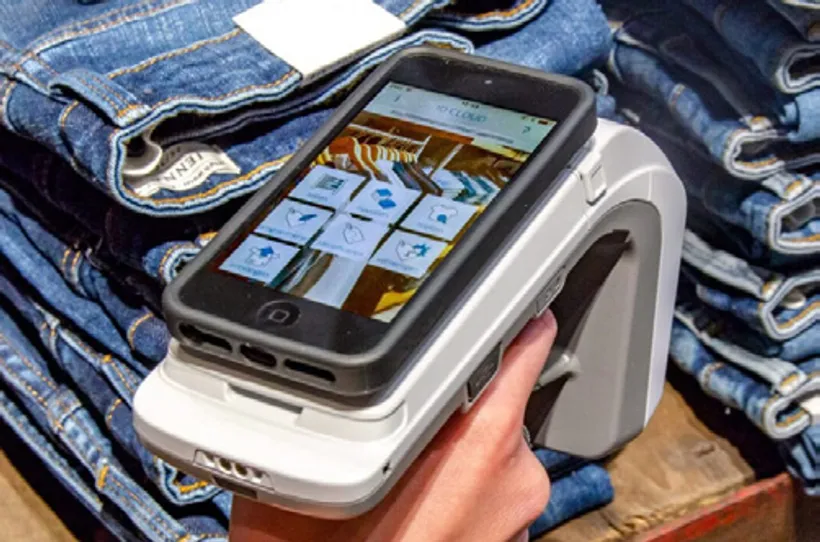
of RFID adopters among retailers who have upgraded their inventory systems reported a direct, measurable financial impact.
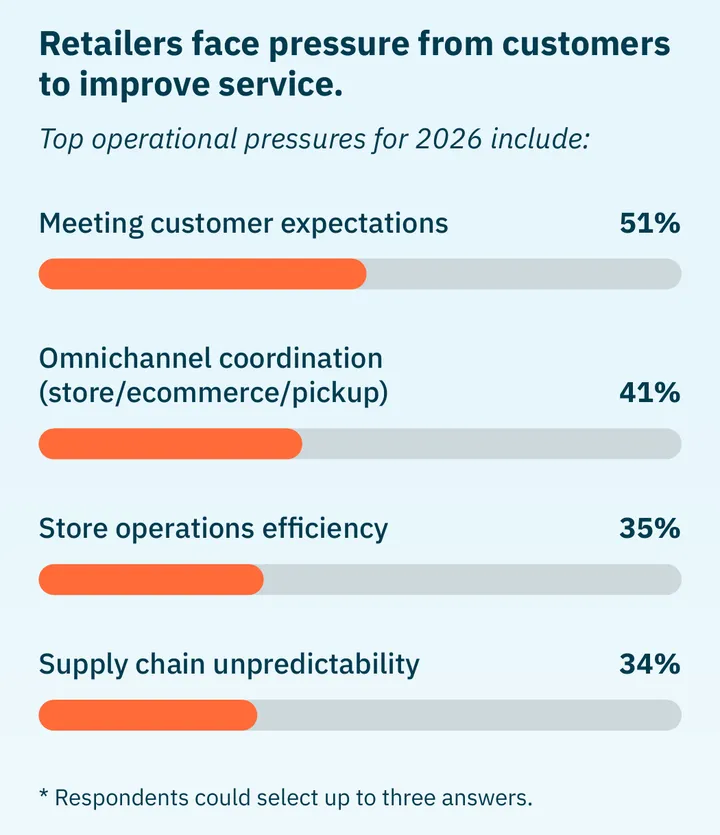
The survey also found that finance leaders may be missing a critical link between inventory visibility and profitability. With more than half of respondents reporting that their organizations will prioritize store operations and customer experience over the next 12 months, the conditions are right for inventory accuracy to move from a back-office concern to a boardroom priority.
Respondents could select up to three answers.
Three sneaky margin killers you might be facing
More channels translate to more complexity — and more places for inventory precision to break down. The survey data uncovered three inventory challenges that may be undermining retail performance:
- Inventory inaccuracy affects every aspect of retail operations.
- Retailers aren’t sure what’s causing inventory inaccuracy.
- Poor inventory visibility carries a steeper financial price tag than many retailers realize.
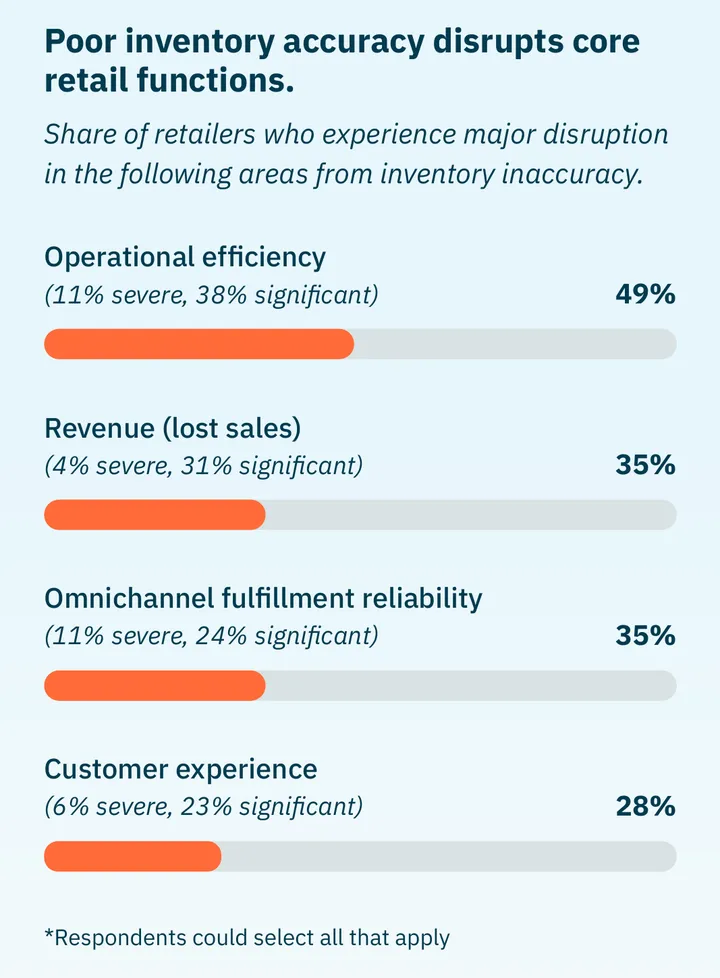
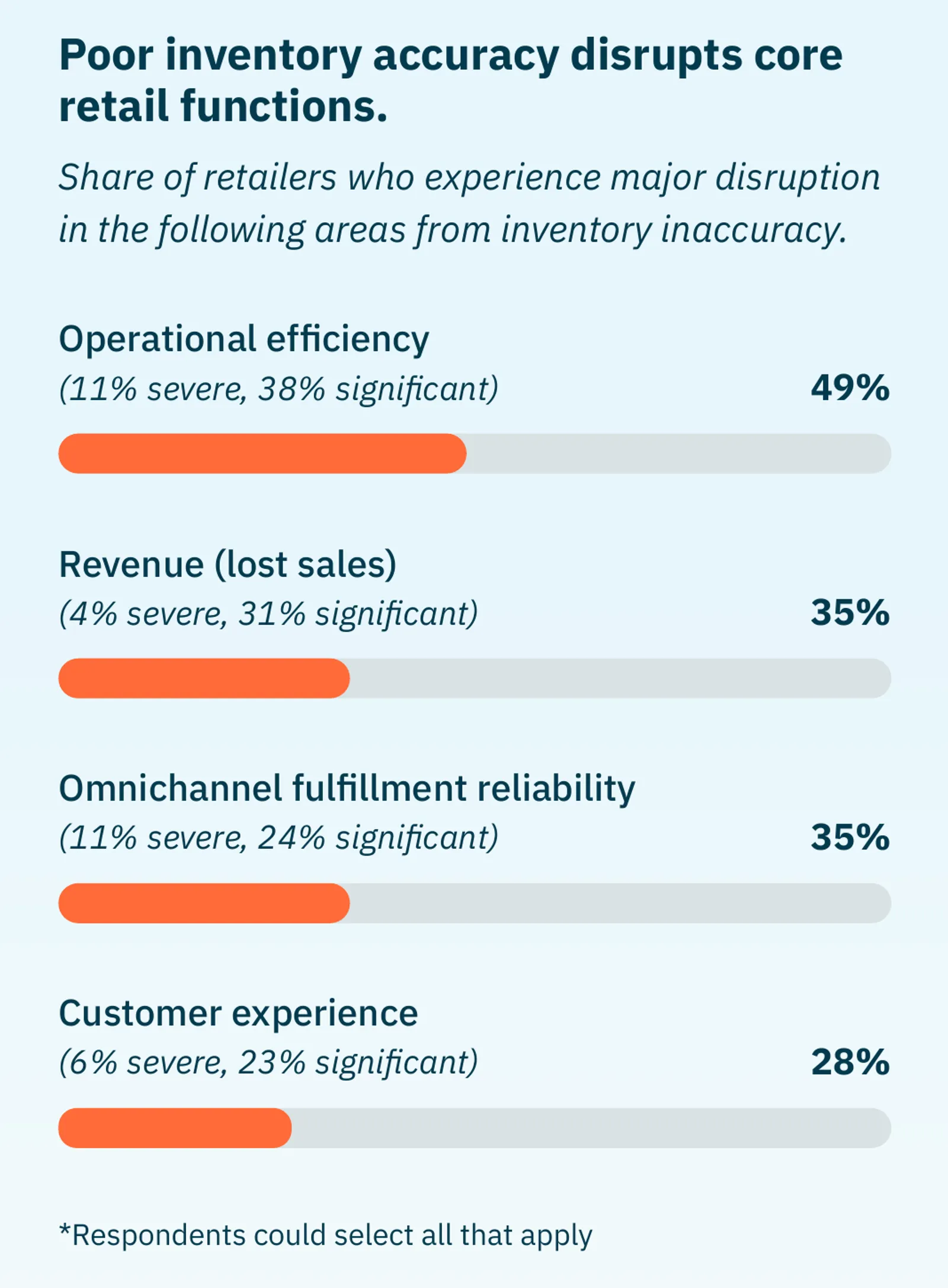
Inventory inaccuracy affects every aspect of retail operations.
Not having the right T-shirt in the right color at the right time results in more than just a single lost sale. Respondents who initially said they had a handle on inventory reported several downstream effects stemming from poor inventory management.
A CFO perusing reports might see 10 T-shirts in a store, but when they zoom in to the item level and break the shirts into different colors and sizes, that’s when discrepancies appear. “Suddenly the numbers don’t add up, and that can lead to confusion along the buying journey,” says Bruno Bakker, Director of Sales for North America at Nedap, which provides real-time inventory technology applications for unified and AI-driven commerce through a complete Radio Frequency Identification (RFID) solution.
Respondents could select all that apply.
One might assume the business case for inventory accuracy is most evident at the store level. However, RFID technology can provide the complete picture retailers need when serving omnichannel customers, offering granular, item-level visibility and automated inventory tracking across all channels and points in the supply chain. Bakker points out that end-to-end technology tracks items across factories, distribution centers, and stores, feeding real-time data into existing systems like Enterprise Resource Planning systems (ERPs) so both headquarters and store staff can act on it.
Clean inventory data can also improve the employee experience. “Everyone wants to feel successful in their role, and when store staff trust the system, they’re confident they’ll be able to delight the shopper by producing the right size from the back of house,” Bakker says.
Retailers aren’t sure what’s causing inventory inaccuracy.
While the survey findings show that retailers recognize vulnerabilities, their responses indicate they may not be able to pinpoint where those weak spots are originating.
Respondents could select up to three answers.
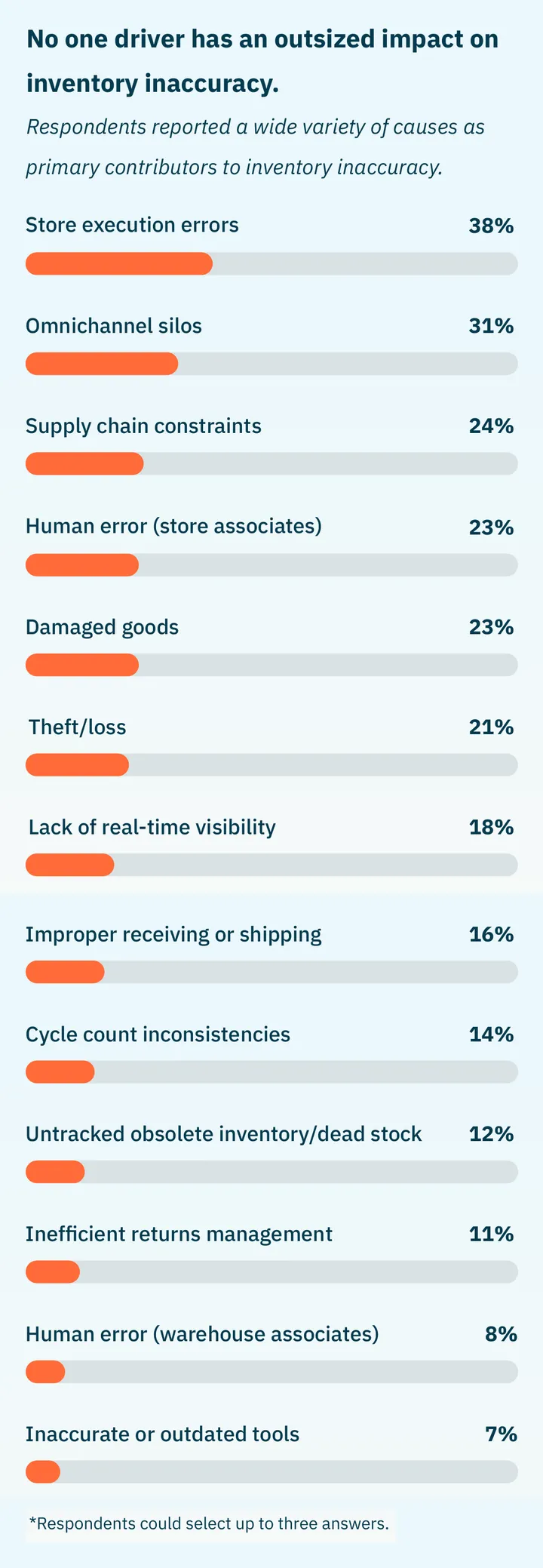
While the two top contributors cited were store execution errors and omnichannel silos, Bakker notes that these answers are likely serving as a “catch-all” that underscores a general lack of insight into where the breakdowns are happening. “You can draw the conclusion that currently most retailers see their stores as black boxes,” he says. “That means they struggle to have a view that allows them to compete in the channels customers are looking for, from BOPIS to ship-from-store.”
Given that, it’s easy to see how inventory gaps begin and how inconsistencies compound. Say a repeat customer is trying on two pairs of shoes, yet after selecting their size, an associate inadvertently rings up the wrong one at the register. While store staff may be unaware of the mixup, the system should be able to detect it.
“Stores that have RFID can flag it right away due to the system’s consistent updates. Those without RFID wouldn’t be able to resolve it until their next physical inventory count,” Bakker explains, noting that there would have been several instances baked into the shopping experience where RFID would have captured which shoe the customer was trying on and had shown intent to purchase. “RFID is like shining a light into the black box to actually see what’s going on in that store environment.”
The consequences of inventory mismanagement add up. Without item-level visibility, retailers tend to compensate by holding excess safety stock across their distribution network, which often can’t be sold at full price.
Poor inventory visibility carries a steeper financial price tag than many retailers realize.
Among retailers who have upgraded their inventory systems, 97% of RFID adopters reported a direct, measurable financial impact. More visibility into inventory is a clear profitability driver, enabling retailers to make more informed decisions about pricing and replenishment to avoid overstocking and unnecessary discounting.
Respondents could select up to two answers.
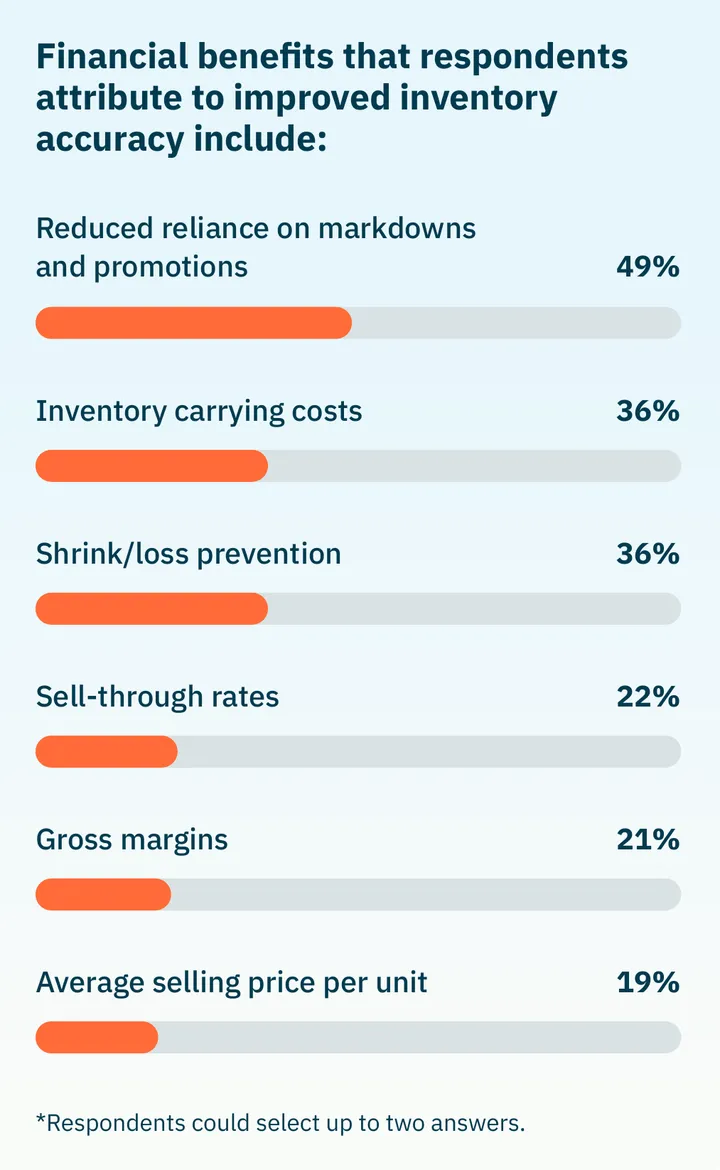
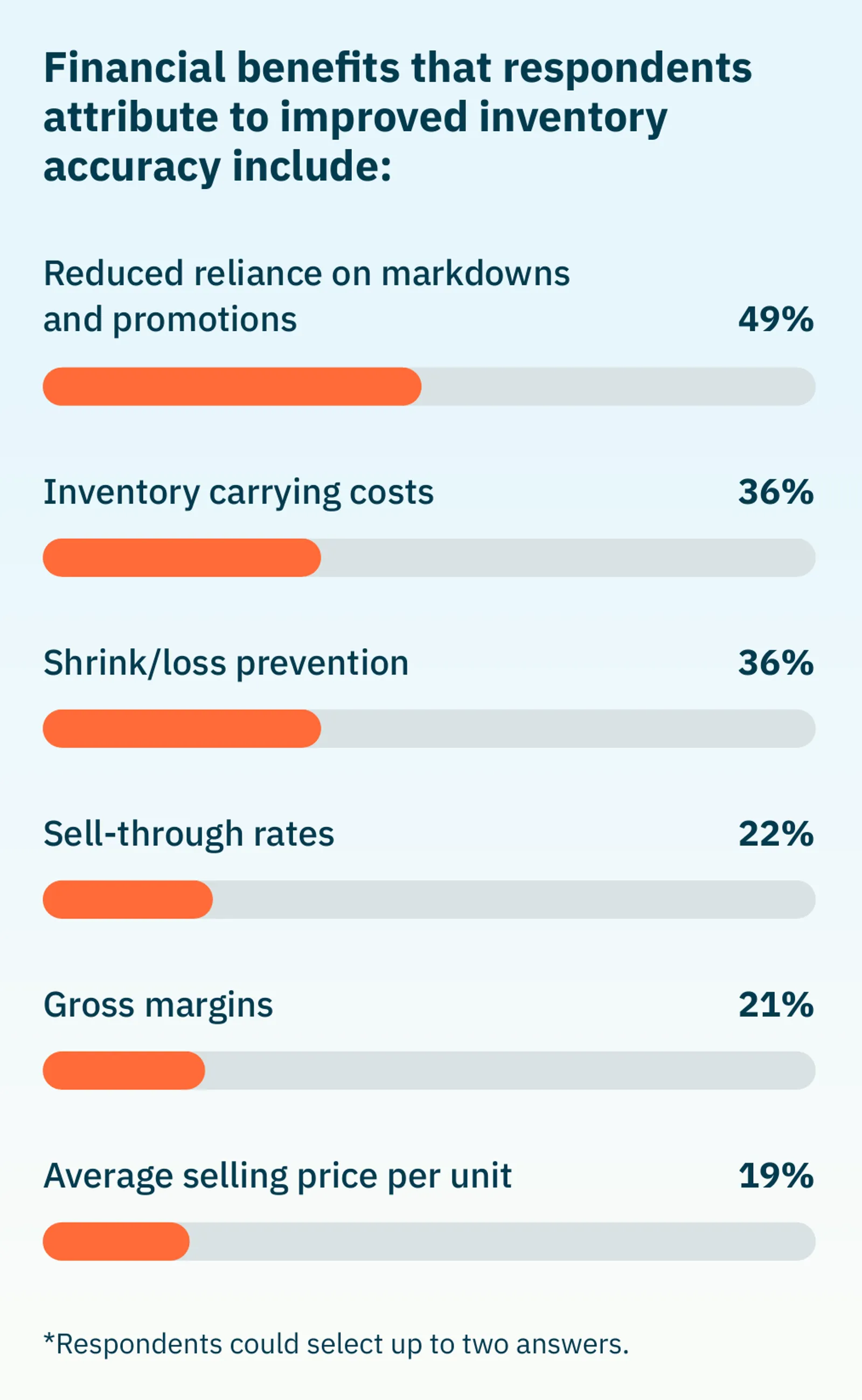
There’s a tangible financial upside to addressing inventory shortfalls because product availability directly translates into sales and margin. But it’s harder to quantify the equally important factor of customer satisfaction.
“When a customer walks into a store and can’t find the product they want, the consequence of that disappointment is largely unmeasured,” Bakker says. While retailers may assume that a substitution softens the blow — for example, a customer purchases a red shirt if the white one is unavailable — Bakker believes the downstream costs can be larger. “It could be that because the store didn’t have the white shirt the customer was set on, they then don’t complete an outfit with pants or accessories.”
Retailers may well be underestimating these effects or chalking them up to the cost of doing business, which can be detrimental. Bakker was surprised to find that respondents shrugged off many longstanding struggles, from store replenishment to stockouts, as only “moderately challenging.”
However, with a stated goal of customer satisfaction, complacency about issues such as stockouts and timely replenishment makes it impossible to deliver on that promise.
“The danger is that retailers will never know about the sale that didn’t get made.”
Bruno Bakker
Director of Sales for North America at Nedap
The technologies that help retailers see the full inventory picture
For retailers serious about closing the visibility gap, RFID technology has emerged as the tool of choice. When respondents were asked about the main challenges they intended to solve by adopting RFID, “improving the customer experience” (45%) and “inventory accuracy” (43%) topped the list.
They also reported a wide array of measurable outcomes achieved through RFID deployment:
Respondents could select up to three answers.
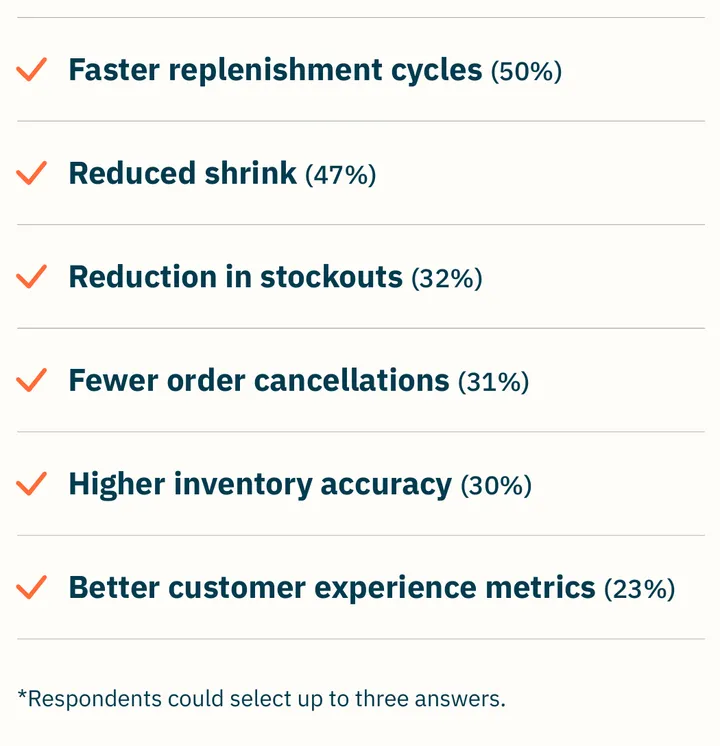
The gains are significant among retailers who adopt RFID. Bakker finds that precision typically jumps from 65-80% to roughly 98-99% with RFID. That increase offers a direct dividend across three areas:
- First, stores can better manage replenishment, which directly drives in-store sales as more customers find what they’re looking for.
- Second, knowing exactly what’s in stock reduces the need for safety stock buffers and leads to fewer order cancellations, a common cause of dissatisfaction.
- Third, sell-through rates improve.
Bakker believes the potential to improve sell-through rates is the most underappreciated benefit of better inventory visibility, given that only 22% of respondents cited it as a measurable financial gain they have experienced from improved inventory accuracy. “We believe these respondents may be underestimating the profit drag hiding in their existing stock,” he says. “After all, when you know what you have, you can sell way more with less stock.”
A visibility toolkit that makes the difference
Despite RFID’s strong effectiveness ratings, barriers to adoption remain. For respondents, the clearest path to approval is to focus on return on investment: 79% of respondents say demonstrating definitive ROI is the factor most likely to resonate with budgetary decision-makers.
As an experienced implementation partner, Nedap is equipped to help prove the business case, Bakker says, highlighting the company’s extensive on-the-ground expertise gained from deploying RFID across tens of thousands of stores. “Because our team has implemented the system with so many other retailers, we can apply those learnings to help other retailers easily address typical challenges,” he says.
For example, virtual shielding eliminates a recurrent friction point by calculating back-of-house versus front-of-house product location without a physical shielding layer. This breaks down implementation barriers.
Most importantly, Bakker says the Nedap team is focused on proving value early, typically through a pre-rollout phase in which they track core KPIs at select stores, using a process designed to isolate RFID’s payoff from external variables like weather or staffing fluctuations.
“Eliminating those factors allows us to determine what gains we can attribute to our solution,” Bakker says. Once these proof points are established, a rapid rollout can follow, allowing them to start reaping the accompanying returns immediately.
Accuracy as a strategic advantage
The business case for inventory accuracy extends well beyond avoiding stockouts. When retailers have a true item-level view of what they have and where, the entire operation performs better: Stores replenish the right products, and customers find what they’re looking for across the entire omnichannel journey.
“Item-level inventory visibility comes down to one question: Do I actually have the right size and color of a product available for my customer?” Bakker says. “If you know what items you have across your supply chain — and specifically within your store fleet — you’re able to serve customers with the right product, which is the essence of a positive customer experience.”
He emphasizes the importance of compounding value as it relates to supply and demand. Retailers who have established a foundation for better inventory accuracy are positioned to layer on automation that will free up store staff to spend more time assisting customers 1:1 — all while offering insights into a wide variety of store metrics that aid everything from supporting loss prevention efforts to deepening supply chain visibility.
The retailers who treat inventory consistency as a strategic priority will be best positioned to meet customers wherever they shop and to capture every sale along the way.
To find out how RFID can help future-proof your operations, visit Nedap today.
Source: A Wakeup Call for Finance Leaders: The Impact of Inventory Blind Spots on Retail Margins. Custom content for Nedap from Studio by Informa TechTarget.
About Nedap
Inventory Engine
Since 1929, Nedap has been creating technology that makes life easier for retail professionals — whether on the sales floor, in stockrooms, warehouses, or corporate offices.
Our RFID solutions deliver real-time inventory visibility across the supply chain, helping retailers prevent losses without compromising the customer experience.