

Exploring how US and European retailers take different paths in loss prevention
November 28, 2025


Retailers are adopting RFID technology at scale to ensure instant product availability by raising inventory accuracy to over 98%. Most retailers implement RFID to improve both inventory visibility and supply chain transparency, enabled through source tagging products with RFID labels.
But RFID adoption goes far beyond inventory management. Once every item is uniquely identified and connected through a single retail platform, retailers unlock new opportunities to optimize store operations, reduce friction at checkout, improve loss prevention, and combat fraud at the point of sale.
RFID enables retailers to move beyond periodic inventory counts, toward a future of continuous, real-time inventory accuracy. Instead of inventory “at rest,” retailers gain live visibility into what is happening across stores, stockrooms, exits, and checkout environments at any moment.
Point of sale
One of the biggest challenges for retailers is matching the convenience of online shopping with the in-store experience. A major benefit of e-commerce is that customers do not have to wait in line at checkout. Increasing the speed of the in-store checkout process has therefore become a major driver of customer satisfaction.
RFID adoption significantly speeds up the checkout experience while also giving store associates more time to focus on customer service, omnichannel fulfillment, and click-and-collect orders. With RFID-enabled checkouts, products are automatically identified without requiring individual barcode scans, reducing friction during transactions.
Using RFID at the checkout can speed up transaction times by at least 20%, and by as much as 75% when no security hard tags are used.
Through iD Cloud, these checkout processes are connected directly to real-time inventory updates, ensuring every sale instantly contributes to accurate stock visibility across the entire retail ecosystem.

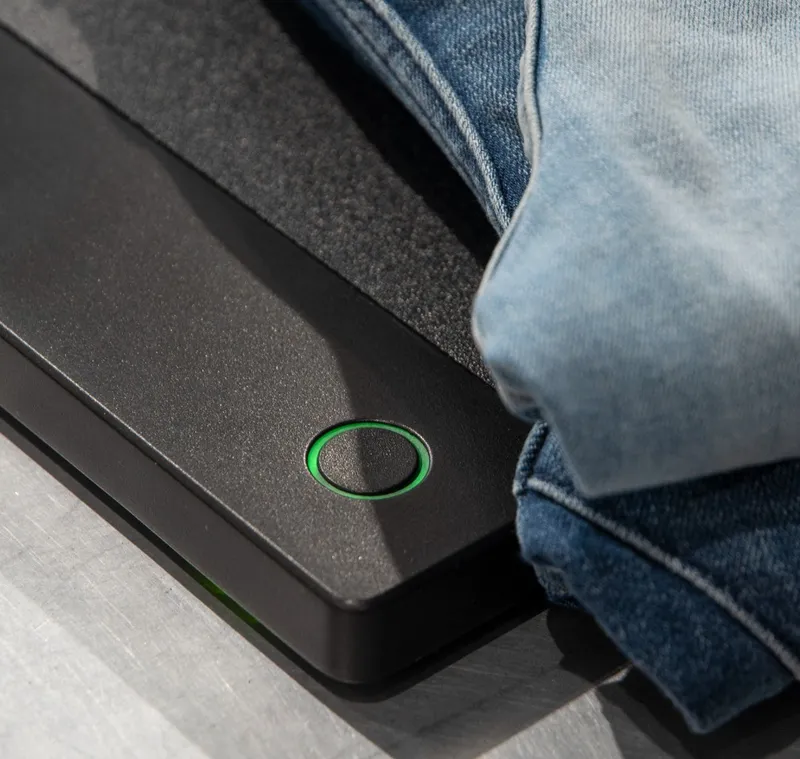
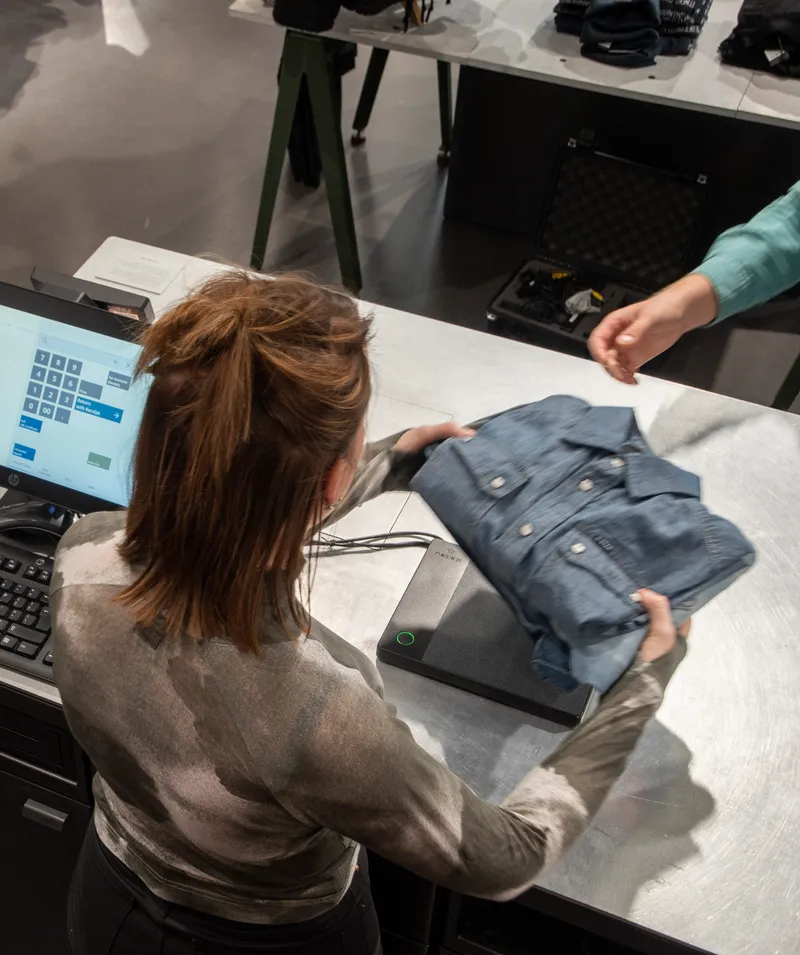
Similar to employee-assisted checkout, RFID-secured self-checkouts are significantly faster than traditional RF (Radio Frequency) or AM (Acoustic Magnetic)-secured solutions.
RFID-enabled self-checkouts provide unparalleled convenience because customers can simply place their basket in the checkout area, where all items are instantly recognized within seconds. This reduces checkout time by more than half while also lowering the risk of customers forgetting to scan items.
By leveraging iD Cloud as a one-platform solution, retailers can seamlessly connect self-checkout data with inventory visibility and loss prevention workflows. This ensures that inventory accuracy remains high even as retailers introduce more autonomous shopping experiences.

Traditional EAS (Electronic Article Surveillance) systems do not support mobile payment solutions while simultaneously securing products. As retailers continue to invest in frictionless shopping experiences, this limitation becomes increasingly problematic.
Our cloud-based RFID platform iD Cloud makes it possible to secure products while enabling mobile self-scan checkout solutions. Once payment is completed, the platform automatically recognizes sold and unsold items at the exit, ensuring that loss prevention systems only alert for unpaid merchandise.
This integration between checkout, inventory, and loss prevention demonstrates the power of Nedap’s Inventory Engine vision: inventory intelligence should continuously flow across all retail processes in real time. By creating a single source of truth for inventory, retailers can confidently deploy mobile checkout solutions without sacrificing security.

Return fraud is a form of shoplifting in which customers attempt to return stolen or worn items in exchange for money or store credit.
With RFID, this type of fraud can largely be eliminated because employees can instantly verify whether a specific item was previously purchased and whether it was bought online or in-store. Every RFID-tagged item has a unique identity, enabling retailers to validate purchase history with far greater accuracy than traditional systems.
Through iD Cloud, this item-level intelligence becomes available across all channels and store locations, helping retailers reduce fraudulent returns while maintaining a seamless customer experience for legitimate returns.
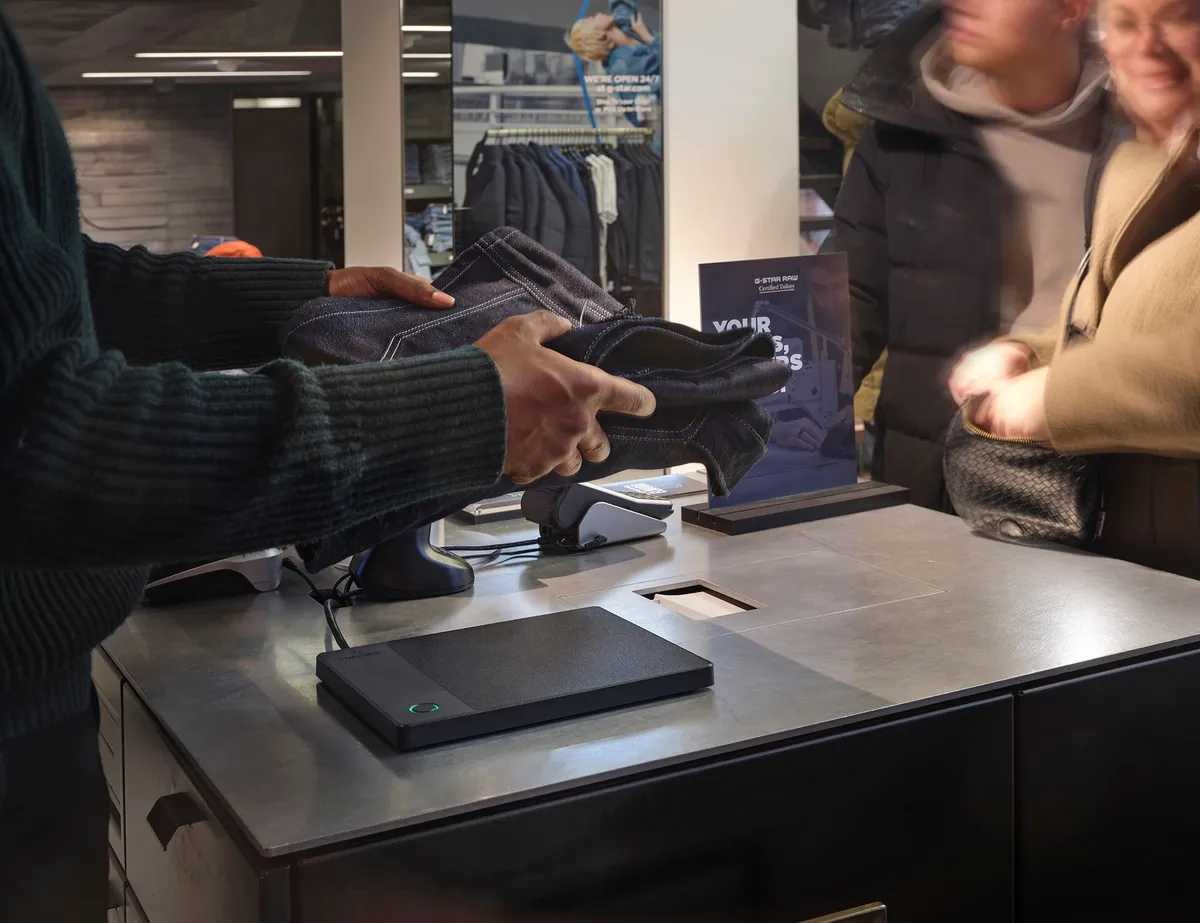
Sweethearting is a form of internal fraud in which employees intentionally give unauthorized discounts or free products to acquaintances, friends, or collaborators.
For example, a customer may bring two sweaters to checkout while the employee only scans one item but removes the security tags from both. Traditional systems often rely heavily on manual processes, making this type of fraud difficult to detect.
RFID solutions prevent this type of theft because security deactivation happens automatically during the payment process. Store associates can no longer manually deactivate product security without a completed transaction, significantly reducing opportunities for internal fraud.
When connected through iD Cloud, these events also become part of a broader data ecosystem that helps retailers identify suspicious behavior patterns, improve operational visibility, and strengthen data-driven loss prevention strategies.

At Nedap, we help global retailers successfully adopt and scale RFID by enabling real-time stock accuracy, improving product availability across channels, and supporting smarter operations — empowering brands to enhance their processes, wherever they are in their journey.

November 28, 2025
November 7, 2025