
A Wakeup Call for Finance Leaders: The Impact of Inventory Blind Spots on Retail Margins
October 2


 Ilse Protsman
A translation of the article written and published by Pambianco News.
In retail, the gap between omnichannel ambition and execution remains one of the most complex challenges to solve. Customers now move seamlessly between physical stores, e-commerce, social media, marketplaces They expect consistent service, product availability, and fast response times. But for unified commerce to become truly operational, simply adding more channels is not enough. Retailers need a reliable, up-to-date, and shared source of truth.
This was the premise behind the morning of May 20th at Don Lisander in Milan, where Nedap brought together a select group of retail and fashion executives for the executive roundtable and lunch, title Driving Unified Commerce: From Real-Time Inventory to Results. At the heart of the event was the Capri Group case study and a roundtable discussion moderated by Camilla Antonioni, journalist at Pambianco.
The objective was to explore what it takes to transform inventory visibility into measurable business outcomes. Rather than a commercial presentation, the event was designed as a conversation between professionals facing the same challenges every day: inventory accuracy, operational execution, product availability, stock management, customer experience, and turning data into decisions. Nedap intends to further develop this format in Italy, creating additional opportunities for discussion around the evolution of retail and its operational challenges.
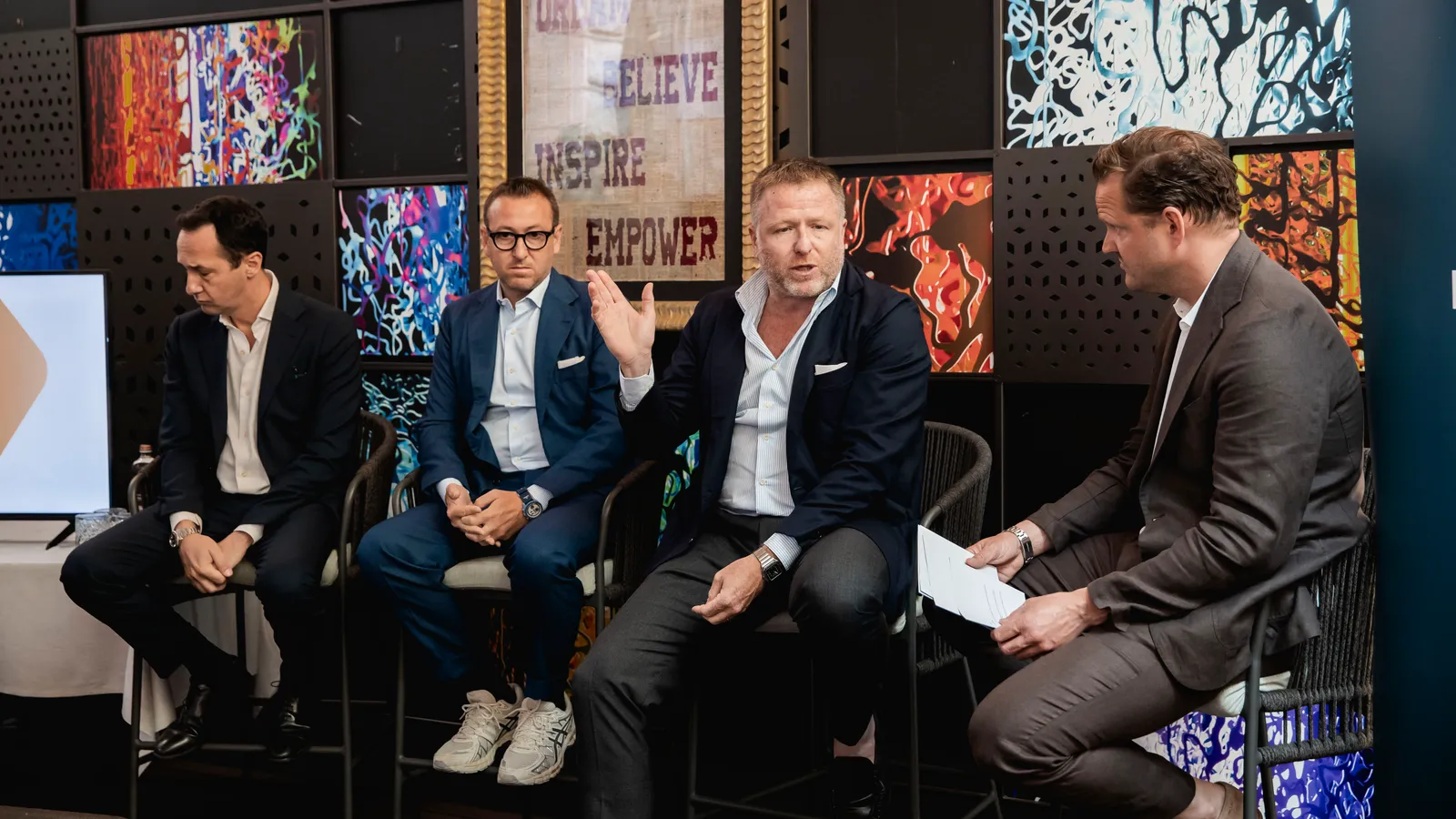
The morning opened with the interview “Capri Group x Nedap: How Inventory Intelligence is Shaping the Future,” led by Sjoerd Dijkstra, Sales Director Italy at Nedap, together with Capri Group management: COO Marco Buono and CEOs Salvatore and Francesco Colella. The group, owner of the Alcott and Gutteridge brands, shared how, with the support of Nedap’s solutions, they transformed inventory from an operational challenge into a driver of efficiency and growth.
From left to right: Marco Buono, Francesco Colella, Salvatore Colella, Sjoerd Dijkstra

“We have around 250 stores across our two brands and are a 100% retail company, primarily operating in Italy,” explained Salvatore Colella. He highlighted how the organization has always been deeply retail focused.
“Today, we are rationalizing our retail network and store footprint, both in terms of size and location. Many shopping centers are no longer as attractive as they once were, many historic city centers have changed, and we are adapting just like many retailers are.”
In this new retail landscape, the physical store remains central, but its role is evolving.
“For us, putting the customer first means something tangible,” Colella added.
The Capri Group story naturally led the discussion toward RFID.
Francesco Colella explained that RFID had been on the company’s agenda for years but required both the right timing and the right partner to be implemented successfully at scale.
“RFID was something we had been considering for a long time. Previously, conducting accurate store inventories required significant staffing effort, and even then, the numbers never fully added up. The introduction of RFID and a partner like Nedap allowed us to finally realize this vision, with the right timing and a level of accuracy that genuinely surprised us.”
According to Capri Group, the benefits extend far beyond inventory accuracy and impact the entire sales model.
“Our online business fulfills orders from both the central distribution center and our stores,” explained the CEO. “The split is roughly 70/30: 70% comes from logistics and 30% from stores. Before RFID, a significant portion of that 30% was lost because products that appeared available were not actually there. RFID dramatically reduced this issue.”
The scale of the impact is significant.
“All of this applies to 15 million garments,” Salvatore Colella emphasized. “Beyond the financial impact, the real value lies with the customer. Previously, a failed shipment created customer service issues and a host of additional problems.”
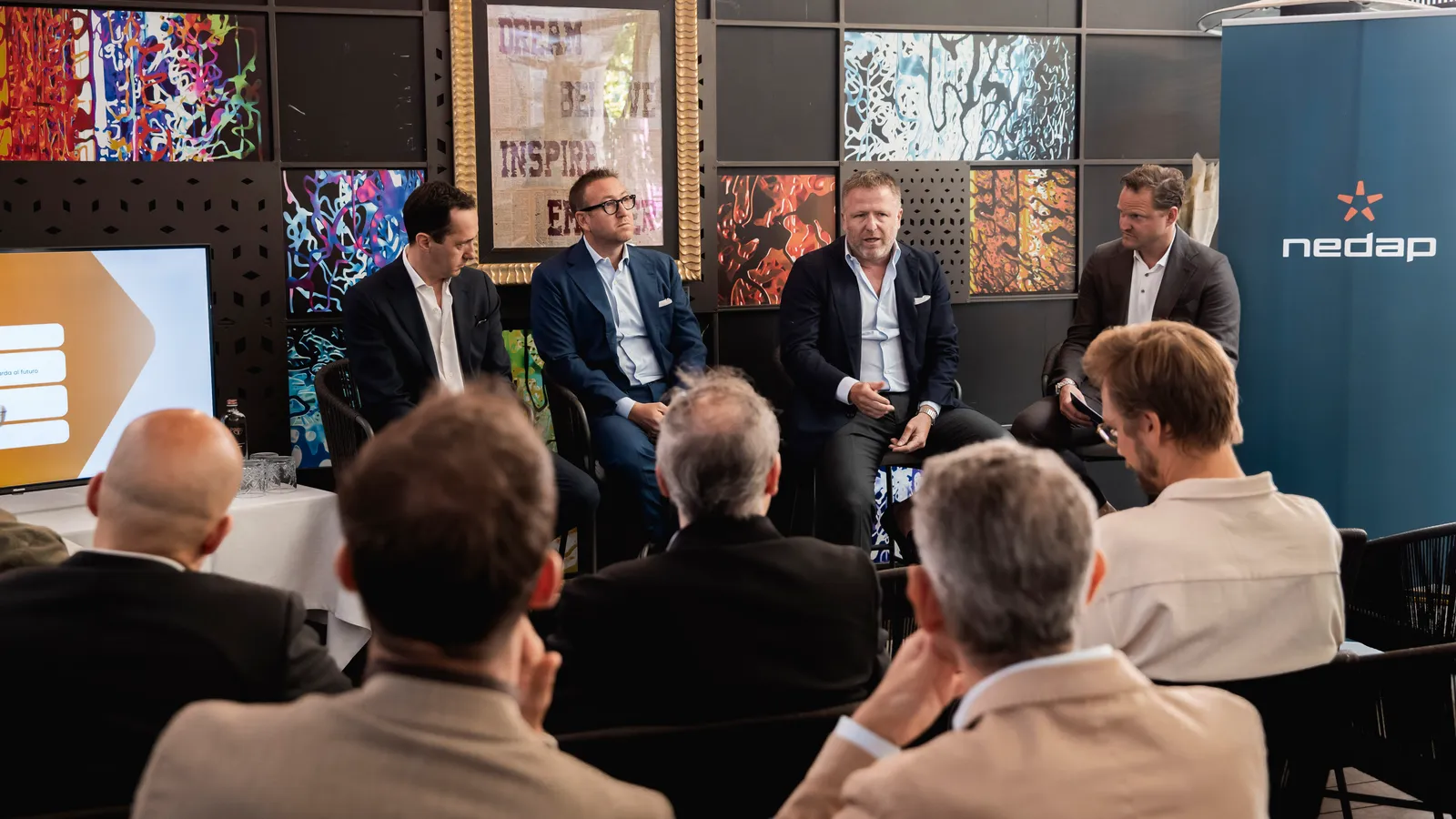
The event started with a live case study with the CEOs and COO of Capri Group
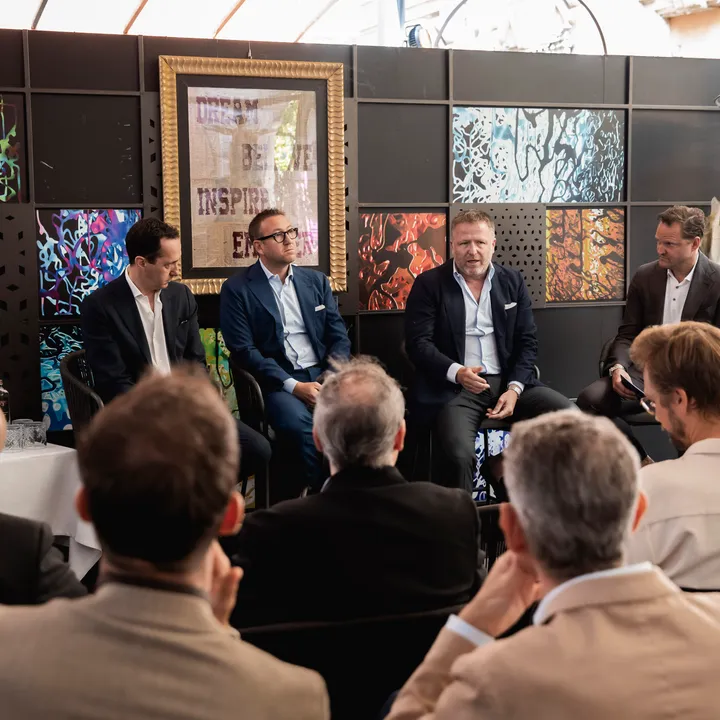
Marco Buono explained the operational side of the project and the implementation journey with Nedap.
“In six months, we rolled out the first brand, Gutteridge: 80 stores and 2 million items,” he said. “The key success factors were both technical and operational: the ease of integration, the usability of the software both at headquarters and in stores, and the strong support provided by the Nedap team.”
The impact on inventory levels was immediate.
“Having precise inventory management in our stores led to a 20% reduction in store inventory last year,” said Buono. “This year, we are already seeing an additional 15% reduction on top of last year’s reduction. Previously, there was always uncertainty about the data. Today, because we trust the data, we can confidently reduce inventory coverage.”
The availability of reliable data has also improved visibility into theft, fraud, and operational anomalies.
“By counting inventory every week, we immediately understand if there is a problem in a store. We analyze the numbers weekly and again at month-end. A single week can be influenced by specific events, but monthly trends make issues very clear.”
Following the interview, the event continued with a roundtable discussion involving executives and professionals from leading retail, fashion, technology, and omnichannel organizations.
The discussion focused on four key themes:
One of the first topics to emerge was the persistent gap between strategic vision and day-to-day execution.
The physical store remains central but must be seamlessly integrated with online and other channels. In this context, inventory is no longer viewed as a logistical function but as a commercial lever. Inaccurate availability creates cancelled orders, service disruptions, out-of-stocks, and loss of customer trust. Conversely, accurate inventory data becomes the foundation for increased sales, reduced inefficiencies, and stronger margins.
The discussion also highlighted how RFID delivers value differently depending on the retail segment.
In fast fashion, RFID enables speed, stock rotation, and volume control.
In luxury and premium retail, RFID supports customer relationships and service quality without replacing the selling experience. Instead, it empowers store associates to quickly verify sizes, colors, availability in nearby stores, and inventory in local warehouses, creating a smoother customer experience.
Another key theme was dynamic inventory management.
Participants agreed that there is no universal inventory counting frequency. Some retail models require weekly counts, others monthly or seasonal counts, while others benefit from a variable frequency driven by anomalies and business needs.
However, everyone agreed on one thing: establishing and maintaining a reliable baseline is essential. Only from trusted data can retailers make informed decisions about replenishment, transfers, allocation, and ship-from-store operations.
Perhaps the most discussed topic was the transition from data to decisions.
More information alone does not create value. Data only becomes valuable when it is translated into action for both headquarters teams and store teams.
Participants emphasized the need for more integrated tools that simplify operations rather than adding complexity. Too many disconnected systems risk turning omnichannel retail into an operational burden, while stores need to remain focused on sales and customer service.
The Inventory Engine for Unified Commerce
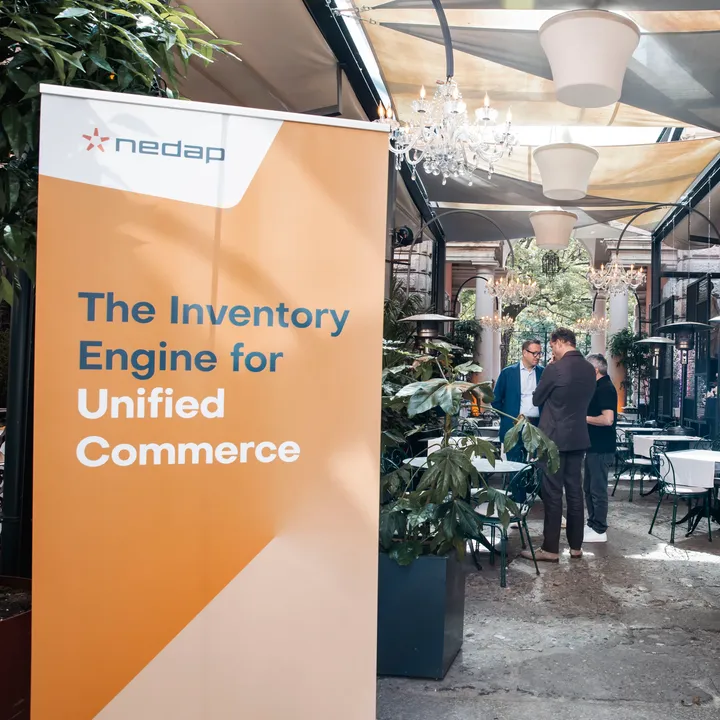
This is where Nedap’s work comes into play.
The Dutch technology company develops solutions that improve operational efficiency, with a particular focus on inventory management and stock visibility across the entire supply chain. Its RFID solutions help retailers improve inventory accuracy, optimize stock levels, reduce losses, and increase operational continuity.
Reducing the time spent on activities such as inventory counting or receiving stock from distribution centers frees up resources, improves data accuracy, and allows store teams to focus more on selling and serving customers.
Looking ahead, participants identified artificial intelligence as a potential accelerator, but only when built on reliable data. Without accurate visibility into products, locations, and availability, even the most advanced algorithms risk making poor decisions.
In this context, RFID was recognized as a foundational enabling layer, not only for inventory management but also for supply chain traceability, digital product passports, after-sales services, and more intelligent customer relationship management.
The morning concluded with an informal lunch, allowing conversations to continue beyond the formal session.
The message that emerged was clear: physical retail is not disappearing, but it must evolve. To do so, retailers need reliable data, consistent processes, and tools capable of transforming inventory visibility into measurable business outcomes.
In other words, unified commerce is not built by multiplying channels. It is built by connecting them through a single, shared source of truth.
At Nedap, we partner with leading retailers around the world to solve complex operational challenges. Drawing on decades of retail experience, we help customers improve visibility, efficiency, and performance at scale.

October 2
September 30