
A Wakeup Call for Finance Leaders: The Impact of Inventory Blind Spots on Retail Margins
October 2


After implementing RFID to improve stock accuracy, enhance in-store product availability, and embed it in your omnichannel strategy, it’s time to dive into the operational and sustainability benefits of RFID.
 Harmen Koopman
The fashion industry, notorious for its unsustainability, faces a pressing challenge: overproduction and waste. Overproduction occurs when extra quantities are added to orders to avoid running out of stock, mostly caused by insufficient data. The EU generates 12.6 million tonnes of textile waste annually, with clothing and footwear contributing a significant 5.2 million tonnes.
Only 22% of post-consumer textile waste is collected for recycling, leading to incineration or landfill disposal. To compound this, 45 billion of 150 billion fashion items are never sold or worn, causing rising environmental and financial costs.
The root of this overproduction issue lies in the multi-layered complexities of retail inventory planning.
Overproduction in the fashion industry refers to manufacturing more clothing and accessories than the market demands. This occurs for several reasons, including retailers' fear of stockouts, which leads them to order excessive buffer or safety stock (also known as overbuying) and inaccurate demand forecasting.
The result is an oversupply of products that often go unsold, contributing to overstocking in stores, significant waste, environmental harm, and financial loss. Overproduction not only burdens retailers with excess inventory but also amplifies the industry's sustainability challenges by increasing the consumption of resources and generating more waste.
To address this, we propose leveraging RFID (Radio-Frequency Identification) data as an innovative solution. Turning real-time data into insights helps guide our customers in making the right decisions. It will allow our customers to have visibility on overstocking and actioning a markdown to ensure dead stock is reduced.
RFID technology, renowned for its real-time accuracy, offers a powerful tool for fashion industry professionals, including buyers, planners, and allocators. It empowers them with insights to improve decision-making across various dimensions.
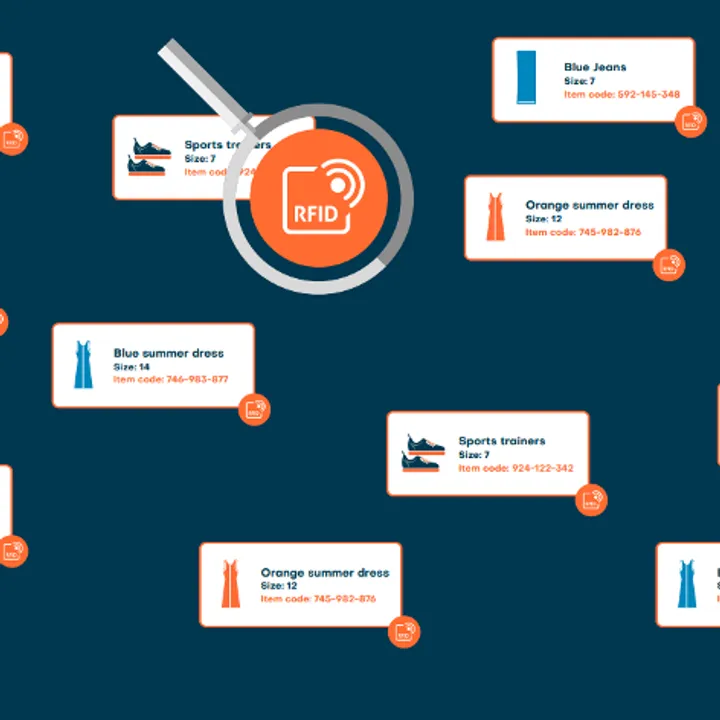
As you can see, there are many questions still unanswered for buyers, planners, and allocators;
What if they could have accurate, real-time, item-level location information alongside historical data?
Overproduction leads to excessive resource consumption, including water, energy, and raw materials, contributing to environmental degradation. It also results in more waste, exacerbating pollution and landfill issues.
Overproduction is at odds with sustainability principles. It strains ecosystems, increases carbon emissions, and depletes non-renewable resources, making it incompatible with long-term environmental goals.
Overproduction leads to unsold inventory, which ties up capital and incurs storage and operational costs. This inefficiency can erode profit margins and hinder a company's financial health.
It can promote unsustainable consumer behavior, such as buying more items than needed or frequently discarding barely worn clothing, contributing to the throwaway culture.
Overproduction can pressure workers in the supply chain to produce more quickly, often under poor conditions, to meet unrealistic demand, raising ethical and labor rights issues.
Reducing overproduction encourages supply chain transparency and ethical practices, enhancing a company's reputation and appealing to consumers who value sustainability and social responsibility.
Sustainable practices, including reducing overproduction, are increasingly important to the fashion industry's long-term viability. Companies that fail to address these concerns may face reputational damage and consumer backlash.
In summary, the fashion industry must actively reduce overproduction to align with sustainable and ethical principles, minimize its environmental impact, operate more efficiently, and ensure long-term success in an evolving market driven by responsible consumer choices.
RFID data-driven insights offer a multifaceted approach to addressing the fashion industry’s waste problem:
RFID insights can help retailers purchase more efficiently, reducing waste created by unsold inventory at the end of a season. With this solution, we aim to minimize end-of-season returns and the associated waste.
RFID technology-based inventory accuracy and near real-time item-level data enable you to allocate stock more efficiently and accurately according to store demand, increasing sales potential and minimizing waste. This also helps you lower stock holding by 2% to 13%, as demonstrated by Nedap Research and a case study with River Island in 2020.
RFID technology improves inventory accuracy by 98% or more, which means the safety stock can be reduced or removed, which lowers the environmental impact of excess production and consumption. Also, by using real-time data from RFID, buyers and planners can identify the best-selling and the worst-selling items. This allows them to buy fewer options in the future and optimize their stock. We project a potential of up to 10% decrease in buying volumes, which is mainly due to the safety stock reduction.
In conclusion, RFID-based inventory data can revolutionize the fashion industry by addressing the critical issues of overproduction and waste. By empowering professionals with real-time insights, improving demand forecasting, and optimizing inventory management, RFID is an important ingredient to a more sustainable and profitable fashion sector.
At Nedap, we help global retailers successfully adopt and scale RFID by enabling real-time stock accuracy, improving product availability across channels, and supporting smarter operations — empowering brands to enhance their processes, wherever they are in their journey.

October 2
February 21, 2025