
A Wakeup Call for Finance Leaders: The Impact of Inventory Blind Spots on Retail Margins
October 2
This fireside chat explores how RFID can help retailers shift from chaos to control through real-time inventory visibility and more connected operations.
This video cannot be played because you have not yet consented to marketing cookies.
Retailers are operating in a faster, more demanding environment. Promotional periods that once centred on a single weekend now extend across weeks, putting pressure on margins, store teams, fulfilment and inventory processes.
Customers also expect a seamless omnichannel experience as standard. They want to know whether a product is available, reserve it, collect it, receive it at home or return it through the channel that suits them. These services are no longer differentiators; they are table stakes.
When product availability is uncertain, the impact is immediate. A customer who cannot find the right size may leave without buying. A customer who reserves an item and discovers that it is not actually there may lose trust in the retailer altogether.
Operational pressure starts well before the store. Delays, partial deliveries, congestion in distribution centres, inaccurate receipts and limited visibility from factory to store all make it harder to allocate stock and fulfil demand effectively.
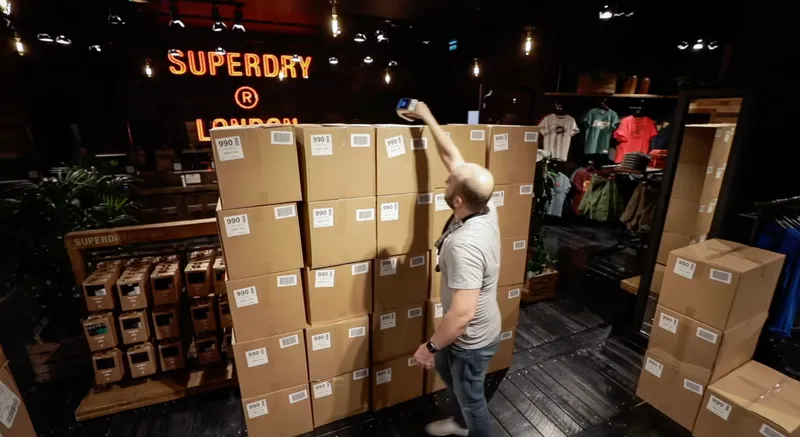
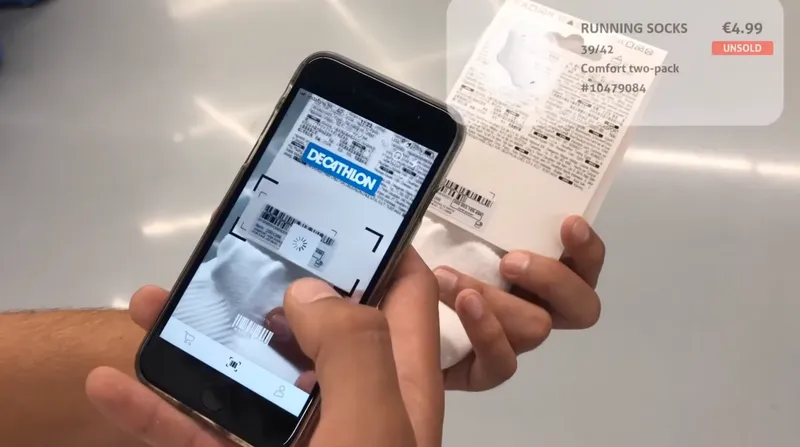
RFID gives retailers item-level visibility. Instead of knowing that there are ten black shirts somewhere in a back room, teams can identify the individual tagged items and use that data to make confident decisions.
Without RFID, inventory accuracy in retail is commonly around 70 to 80 percent and can deteriorate quickly between periodic counts. RFID enables far more frequent counting and supports accuracy levels close to 99 percent, providing a much stronger operational foundation.
Accurate data helps retailers put the right product in front of the customer, replenish the sales floor, allocate inventory across channels and reduce the risk of cancelled orders. It also means store teams spend less time searching and counting, and more time helping customers.
Inventory accuracy is the first layer of a successful omnichannel ecosystem. Reserve-and-collect, ship-from-store and flexible returns only work when the retailer can trust the stock information behind the promise made to the customer.
RFID can support faster replenishment, product search, fitting-room experiences and self-checkout. A colleague who can locate the last required size quickly can keep a customer engaged instead of asking them to wait while a back room is searched manually.
For customers, digital touchpoints can provide product information, alternative colours and sizes, and flexible buying options. For store teams, RFID turns a manual, time-consuming process into a more reliable and sometimes even engaging workflow.
Retailers such as Levi’s have shown how frequent, accurate inventory counts and effective refill processes keep products on the sales floor. Product-search capabilities can guide colleagues towards an item, reducing the time spent looking through dense back-stock areas and freeing them to sell.
These benefits are not limited to the store. Better visibility supports allocation, supplier collaboration, inbound and outbound control, and more efficient use of inventory across the full product journey.
Returns are part of the modern retail journey. When a returned item is processed and counted accurately, it can re-enter available inventory quickly if it is suitable for resale. RFID makes that process faster and more dependable.
The same visibility helps retailers respond to loss and shrink. After a suspected theft event, a store can count inventory in minutes, identify what is missing and take informed action on replenishment, investigation or loss-prevention processes.
Stores are evolving into hubs for discovery, fulfilment, returns and brand experience. This can increase operational complexity, but it also creates an opportunity to offer a better customer journey when data and processes are connected.
The path from chaos to control is not a single technology installation. It is a step-by-step effort to create accurate data, give teams practical tools and use that visibility to serve customers consistently across every channel.
At Nedap, we help global retailers successfully adopt and scale RFID by enabling real-time stock accuracy, improving product availability across channels, and supporting smarter operations — empowering brands to enhance their processes, wherever they are in their journey.

October 2
September 30